Best Indoor Soft Play Climbers for Preschool Classrooms
Table of Contents
- Preschool teachers know that active play matters, but not all climbing equipment is created equal. With heights under 30 inches and GREENGUARD Gold certification, the right soft play equipment does more than just tire kids out—it transforms movement into measurable developmental gains.
- Key Takeaways
- Why Soft Climbing Equipment Transforms Preschool Learning
- Essential Safety Features for Classroom Soft Play
- Developmental Benefits That Matter Most
- Modular Design Advantages for Educators
- Top Soft Play Equipment Types
- Practical Implementation Strategies
- Invest in Equipment That Supports Active Learning Goals
- FAQs
Preschool teachers know that active play matters, but not all climbing equipment is created equal. With heights under 30 inches and GREENGUARD Gold certification, the right soft play equipment does more than just tire kids out—it transforms movement into measurable developmental gains.
Key Takeaways
- Indoor soft play climbers are essential for preschool classrooms because they support gross motor development, spatial awareness, and problem-solving skills in a safe, padded environment
- Safety features like GREENGUARD Gold certification, ASTM compliance, and age-appropriate heights under 30 inches are crucial for classroom equipment
- Modular designs offer maximum flexibility, allowing educators to create different layouts for various activities and group sizes throughout the day
- The right soft play equipment transforms ordinary movement into developmental learning experiences that build confidence and independence
Preschool classrooms need active spaces where children can move, practice motor skills, and develop physical confidence safely indoors. The best soft play climbers create opportunities for active learning while supporting the developmental needs of young children in structured educational environments.
Why Soft Climbing Equipment Transforms Preschool Learning
Soft climbing equipment revolutionizes how preschoolers engage with physical activity in classroom settings. Unlike traditional playground equipment, these foam-based structures provide a cushioned environment where children can practice climbing, crawling, jumping, and sliding without the fear of injury from hard surfaces. This psychological safety encourages children to attempt new movements and build confidence in their physical abilities.
The developmental impact extends far beyond simple exercise. As children navigate ramps, tunnels, and platforms, they develop spatial awareness, motor skills such as balance and foot coordination, and proprioception - the critical ability to sense their body's position and movement in space. Research shows that climbing activities promote problem-solving skills as children figure out how to navigate structures, plan their moves, and overcome obstacles.
For educators, soft play equipment offers unmatched versatility in daily programming. Little People's Cove specializes in modular soft play solutions that can transform from individual climbing challenges during free play to collaborative obstacle courses during group activities. This adaptability makes soft climbing equipment an investment in both physical development and curriculum flexibility.
Essential Safety Features for Classroom Soft Play
1. Age-Appropriate Heights and Impact Protection
Preschool-appropriate soft climbers should maintain peak heights under 30 inches to minimize fall risks while still providing meaningful climbing challenges, adhering to safety standards like ASTM F1487 and F2373. The foam core construction must use high-density, lead-free polyurethane foam that remains firm enough to support children's weight without collapsing, yet soft enough to absorb impacts from tumbles. This balance ensures children can practice coordination and balance-building activities safely.
2. Required Safety Certifications
Quality classroom equipment meets stringent federal safety standards including CPSIA compliance and ASTM F963 safety testing. Indoor playground equipment for schools must also comply with ASTM F1487 for playground equipment, ASTM F1292 for impact-absorbing surfacing, and ASTM F1918-12 specifically for soft contained play equipment. Additionally, GREENGUARD Gold Certification ensures products have low chemical emissions, safeguarding indoor air quality in sensitive environments like schools and daycares. GREENGUARD Gold certified products contribute to healthier indoor environments, potentially reducing respiratory issues and improving attendance.
3. Construction Quality for High-Traffic Use
Classroom soft play equipment faces constant use and frequent cleaning, requiring commercial-grade construction. Look for tear-resistant coverings made from water-resistant polyurethane or heavy-duty vinyl that withstand daily wear. All hardware should be concealed or recessed to prevent injury, and hook-and-loop fasteners should be securely designed to prevent accidental detachment during play. Non-slip bases with textured, grippy bottoms prevent sliding on various classroom floor surfaces during active play.
Developmental Benefits That Matter Most
Gross Motor Skills and Spatial Awareness
Soft play climbing provides rich sensory input that aids in developing spatial awareness, proprioception, and tactile perception - all vital for refining motor skills and supporting overall cognitive development. Children strengthen core muscles, improve balance and coordination, and develop agility through varied movement patterns. The three-dimensional nature of climbing challenges helps children understand their body in relation to space, building foundational skills for later academic concepts like geometry and physics.
Problem-Solving and Confidence Building
Soft play equipment creates a safe environment where children can attempt challenging activities without direct adult intervention, fostering independence and self-confidence. Each climbing sequence becomes a puzzle to solve - which route to take, how to position their body, where to place hands and feet. This problem-solving practice translates into improved cognitive flexibility and persistence. Research shows that enriched sensory play environments positively impact problem-solving abilities and vocabulary development among participating children.
Modular Design Advantages for Educators
Flexible Room Layouts
Modular soft play systems typically use safe, eco-friendly foam cores with durable, easy-to-clean outer fabrics, connected through hook-and-loop fasteners that allow for limitless configuration possibilities. Teachers can quickly rearrange pieces to create different activity zones - from quiet reading nooks using tunnel pieces to active obstacle courses combining multiple climbers. This flexibility accommodates varying group sizes, different developmental levels, and changing classroom needs throughout the day.
Easy Maintenance and Storage
Quality modular pieces are lightweight enough for teachers and older preschoolers to move independently, yet sturdy enough for repeated use. The smooth, non-porous surfaces allow for quick cleaning with classroom-safe, mild soap and water. The modular design enables efficient storage solutions, which is vital in space-limited classrooms. This practical design consideration ensures that incorporating active play doesn't burden already overwhelmed educators with complex setup or maintenance requirements.
Top Soft Play Equipment Types
1. Multi-Level Climbers with Ramps
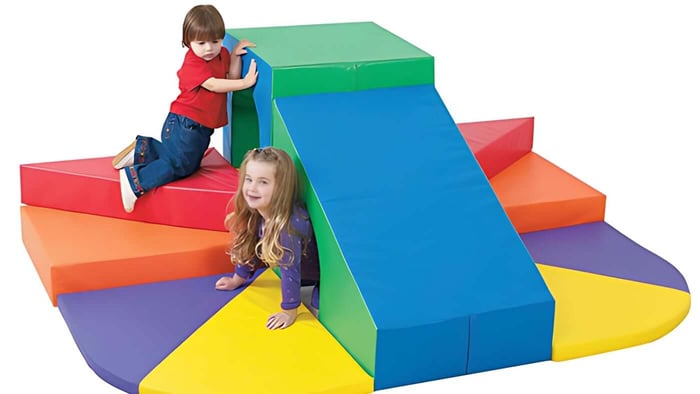
Multi-level climbing structures with integrated ramps provide graduated challenges that accommodate different skill levels simultaneously. These pieces often combine stepping platforms, gentle inclines, and small slides to create varied movement experiences. The Chisholm Trail Soft Play Climber exemplifies this category, combining tunnel, ramp, and slide elements in one cohesive unit that supports varied play patterns and group activities.
Chisholm Trail Soft Play Climber
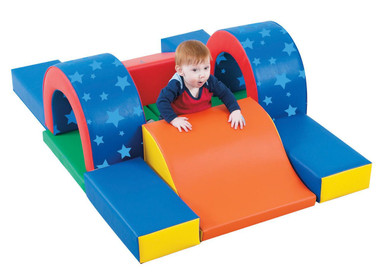
$965.25
Chisholm Trail Soft Play Climber - Modular Foam Tunnel, Ramp & Slide Set for Toddlers Bright colors, playful patterns, and endless movement come together in...… read more
Shop Now!2. Crawl-Through Tunnels
Tunnel pieces offer unique developmental benefits through enclosed movement experiences that improve proprioceptive awareness and spatial reasoning. The Tranquility Crawl Through Tunnel represents this category, providing children with opportunities to practice crawling coordination while experiencing the sensory input of enclosed spaces. Tunnels work particularly well for children who need calming, contained movement experiences.
3. Sensory Activity Stations
Specialized activity stations combine climbing elements with sensory engagement opportunities. The Sensory Truck Activity Play Station demonstrates how soft play equipment can integrate tactile, visual, and motor challenges into unified learning experiences. These stations support early brain development by stimulating multiple senses while providing structured movement opportunities.
Sensory Truck Activity Center
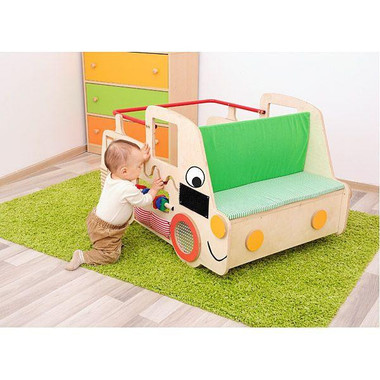
$1,228.20
Sensory Truck Activity Play Station - Motor Skills for Hands-On Exploration Drive learning forward with the Sensory Truck Activity Play Station. This fun sensory activity...… read more
Shop Now!4. Modular Foam Blocks
Individual foam blocks and shapes serve as building components for custom climbing arrangements. The Pattern Gross Motor Foam Climbing Blocks Set allows for infinite creativity in obstacle course design while teaching children about patterns, sequencing, and spatial relationships. These versatile pieces work as standalone climbing challenges or as connecting elements between larger structures.
Pattern Gross Motor Foam Climbing Blocks
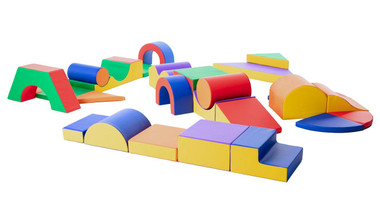
$3,069.00
Pattern Gross Motor Foam Climbing Blocks Set - Modular Soft Play Building Blocks for Toddlers Open the door to creative construction and active movement with...… read more
Shop Now!Practical Implementation Strategies
Daily Classroom Integration
Successful soft play integration requires strategic planning around classroom routines and learning objectives. Use climbing circuits as movement breaks between academic activities, incorporating turn-taking games that build social skills alongside physical development. The equipment can support specific learning goals - creating letter shapes with body positions while climbing, practicing counting steps, or following directional commands during obstacle courses.
Adapting for Mixed Developmental Levels
Preschool classrooms typically serve children with varying abilities and confidence levels. Soft play equipment naturally accommodates this diversity - confident climbers can tackle complex routes independently, while cautious children can start with simple crawling or stepping activities. Teachers can modify challenges by adjusting piece arrangements, providing verbal cues, or offering physical support as needed. This individualized approach ensures every child experiences success and growth at their appropriate developmental level.
Invest in Equipment That Supports Active Learning Goals
The best indoor soft play climbers transform preschool classrooms into active learning environments where physical development and cognitive growth happen simultaneously. Quality equipment combines safety features like appropriate heights, certified materials, and commercial-grade construction with the flexibility to adapt to diverse classroom needs. Modular designs offer the greatest value, allowing educators to create fresh challenges and accommodate different learning objectives throughout the year.
Children with regular access to well-designed soft climbing equipment develop stronger gross motor skills, improved spatial awareness, better problem-solving abilities, and greater physical confidence. These foundational skills support later academic learning while meeting preschoolers' fundamental need for active, exploratory play. The investment in quality soft play equipment pays dividends in children's development and educators' programming flexibility.
Learn how Little People's Cove's soft play equipment solutions can transform your preschool classroom into an active learning environment at littlepeoplescove.com.
FAQs
What safety features should I look for?
Look for padded foam or soft PU construction, a non-slip base, rounded edges, and secure fasteners. Check for certifications like CPSIA compliance and GREENGUARD Gold (low VOCs). The structure should include clear weight limits and be sized appropriately for your age group — for preschoolers, climbers should be no taller than 60 inches.
How much classroom space do I need for soft play climbers?
A single-piece climber fits in roughly a 4×4 ft area. Multi-piece sets (3–5 pieces) require 6×6 to 8×8 ft, plus clearance around the perimeter for safe entry and exit. Plan at least a 6×6 ft zone even for compact options, so children can queue and move without bumping into furniture.
What ages are these soft play climbers for?
Most soft foam climbers are appropriate for children from 6–12 months through age 4. Low-profile designs (under 12–18 inches high) suit beginning crawlers, while multi-piece sets with steps and gentle slides work well for older preschoolers ages 3–5. Always check the manufacturer's recommended age range before purchasing.
How do these suppose children's development?
Soft play climbers build gross motor skills — balance, coordination, leg strength, and body confidence. They also encourage spatial awareness, problem-solving, and motor planning. Socially, children learn to take turns and cooperate with peers. Many occupational therapists use them for sensory processing and motor planning goals.
How do teachers typically use soft play climbers in a classroom?
Most teachers set up climbers in a dedicated gross motor corner. They work well during transition times, as alternatives to circle time, or during indoor recess. Pairing a climber with foam mats and tunnels creates a fuller active play zone. Modular sets can be reconfigured over time to keep engagement fresh.