
Our bicycle tracks and pedal paths are defined riding routes that support guided movement through cycling and trike riding outdoors. Commonly used in playgrounds, schoolyards, and shared outdoor play spaces, these paths help children practice steering, pedaling, and spatial awareness in a structured riding environment. Built for durability and outdoor use, bicycle tracks and pedal paths encourage active movement, confidence, and safe riding through clearly defined pathways.
Products List
-
 - 13%Made in USA- 13%Made in USA
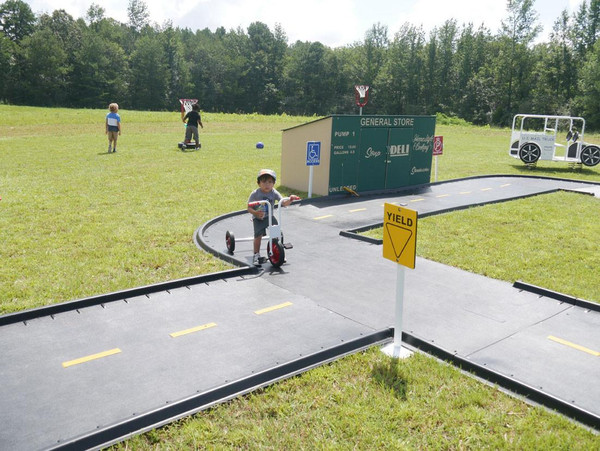
Atlanta Crazy Eight Trike Track
IP-9070$9,536.00$10,966.40Atlanta Crazy Eight Trike Track for Playgrounds - Figure Eight Riding Course for Active Play The Atlanta Crazy Eight Trike Track gives kids a fun, safe place to ride. The figure eight shape adds extra turns and action to every lap. It keeps trikes away... -

 - 13%Made in USA- 13%Made in USA
Bristol Oval Trike Track
IP-9080$7,272.00$8,362.80Bristol Oval Trike Path for Playgrounds - Wide Oval Track for Safe Riding Fun The Bristol Oval Trike Path gives kids their own space to ride, separate from busy play zones. The wide oval loop keeps riders moving in a smooth, steady flow. Kids race,... -

 - 13%Made in USA- 13%Made in USA
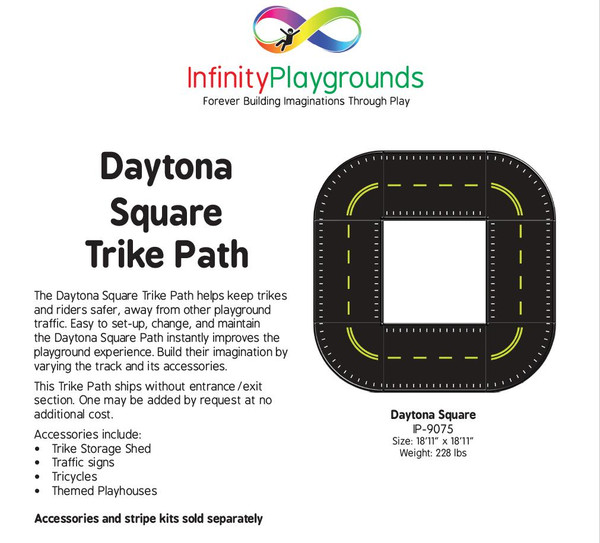
Daytona Square Trike Track Path
IP-9075$5,752.00$6,614.80Daytona Square Trike Path for Playgrounds - Safe Square Riding Track for Kids Give kids their own riding lane. The Daytona Square Trike Path creates a separated track so trikes stay out of busy play zones. The wide five-foot surface lets riders pedal,... -

 - 13%Made in USA- 13%Made in USA
Formula One Road Course Trike Track
IP-9076$13,368.00$15,373.20Formula One Road Course Trike Path - Raceway Style Playground Riding Track The Formula One Road Course Trike Path gives kids a fun and safe place to ride. The long road course layout adds twists and turns. It keeps trikes away from busy play areas. Kids... -

 - 13%Made in USA- 13%Made in USA
Playground Traffic Signs For Trike Tracks
IP-5014x$214.40$246.56Traffic Signs for Trike Path - Safety & Direction Signs for Playground Riding Areas Traffic Signs for Trike Path bring structure, safety, and real-world learning to playground riding zones. Bright colors, clear symbols, and flexible mounting options... -

 - 13%Made in USA- 13%Made in USA
Post Office Outdoor Playhouse
IP-7012$2,414.40$2,776.56Post Office Outdoor Playhouse - Pretend Mail Station for Creative Play Turn your playground into a busy mail hub. The Post Office Outdoor Playhouse lets kids sort letters, deliver packages, and run their own post office counter. Bright signage and an... -

 - 13%Made in USA- 13%Made in USA
Talladega Tricycle Track
IP-9085$4,065.60$4,675.44Talladega Fast Track Trike Path for Playgrounds Give kids their own riding lane with the Talladega Fast Track Trike Path. This five-foot-wide track separates riders from busy play zones so everyone stays safe. Modular sections fit together to match your... -

 - 13%Made in USA- 13%Made in USA
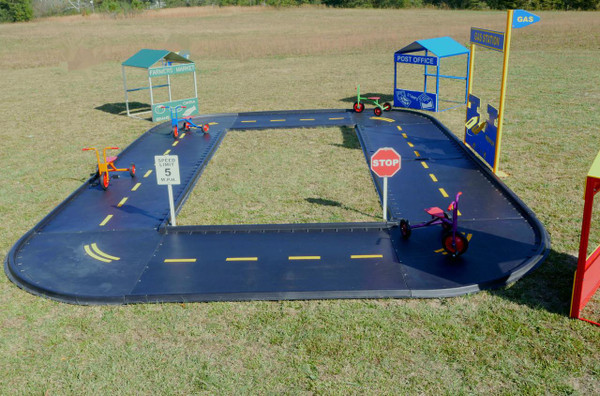
Traffic Signs For Trike Path - Set of 6
IP-5020x$1,217.60$1,400.24Traffic Signs Bundle for Trike Path - Complete Way-Finding Set for Playground Riding Areas The Traffic Signs Bundle for Trike Path gives you a complete, ready-to-use sign system that turns trike paths into real learning zones. Designed for playground... -
 - 13%Made in USA- 13%Made in USA
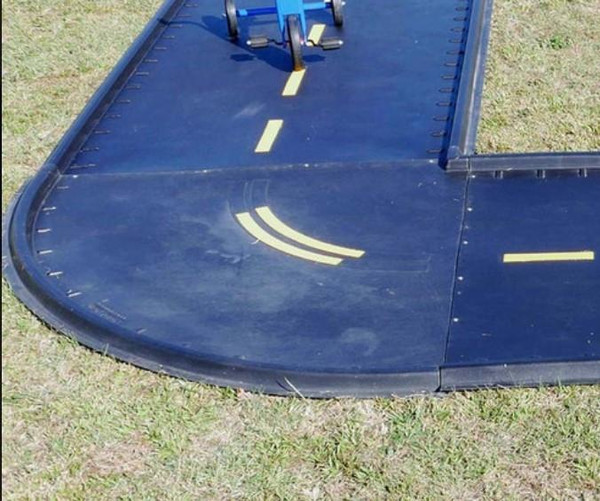
Trike Path Single Curve Track Section
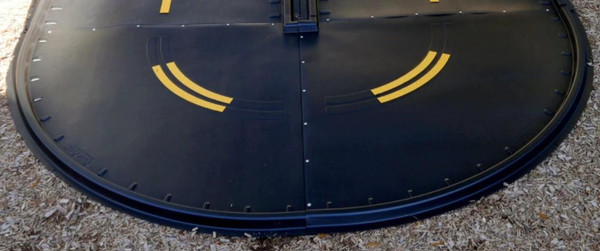
IPSK-9000-C$667.20$767.28Trike Path Single Curve Track Section - Modular Playground Pedal Path Corner Add smooth turns to any trike course with this modular curve piece. Keeps riders on track and away from busy playground zones. Pair it with straight sections to build a... -

 - 13%Made in USA- 13%Made in USA
Trike Path Single Intersection Piece
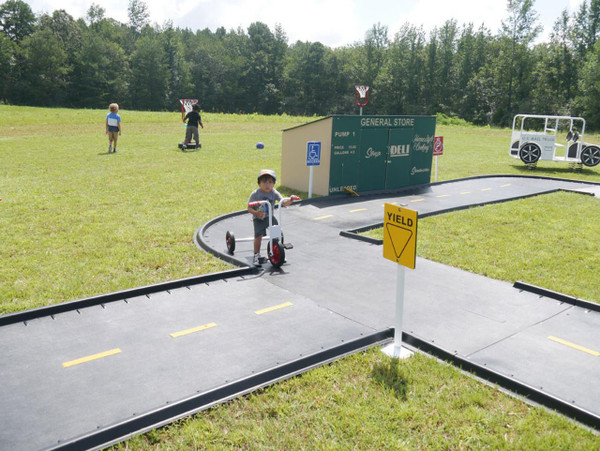
IP-SK-9000-I$928.00$1,067.20Trike Path Single Intersection Piece - Modular Pedal Path Track Crossing Add safe four-way crossings to any riding course with the Trike Path Single Intersection Piece. This modular section guides trikes away from busy play areas, giving kids clear... -

 - 13%Made in USA- 13%Made in USA
Trike Path Single Straight Track Section
IPSK-9000-S$928.00$1,067.20Trike Path Single Straight Track Section - Modular Playground Pedal Path Give riders a clear, safe lane away from busy playground traffic. The Trike Path Single Straight Piece works on its own or connects with curved sections to build a custom... -

 - 13%Made in USA- 13%Made in USA
Trike Storage Gas n Go Playhouse
IP-9150$5,000.00$5,750.00Trike Storage Gas n Go Playhouse - Secure Outdoor Trike Storage Shed Store 15 to 20 trikes in one locked, weather-resistant unit. The Trike Storage Gas n Go Playhouse gives schools and daycares a fun gas-station-themed shed that kids actually want to put... -

 - 13%Made in USA- 13%Made in USA
Trike Storage General Store Playhouse
IP-9152$5,000.00$5,750.00Trike Storage General Store Playhouse - Secure Outdoor Trike Storage Shed Store 15 to 20 trikes in one lockable, weather-resistant shed that looks like a real general store. Kids love parking their ride-ons inside. Teachers love the built-in clean-up...
(:1f476:) What ages work best with playground bicycle tracks and pedal paths?
Preschool pedal paths suit ages 2–5 using low-step trikes with 10–12 inch seats; tracks support beginner balance bikes for 18 months+. School configurations handle 4–7 year olds on small bikes, keeping riders contained for safe group rotations.
(:1f9e0:) What developmental benefits do pedal paths provide kids?
Bicycle tracks build leg strength, steering, balance, and spatial awareness as kids navigate curves and straights during outdoor play. Pedal paths teach turn-taking, following directions, and traffic rules, enhancing motor planning in childcare therapy programs.
(:1f6e1:)️ What safety standards apply to childcare pedal paths and tracks?
Look for 5-ft wide TPO paths with 2-inch borders meeting ASTM F1487; pair with 12-inch rubber mulch surfacing and helmets. Entrance/exit sections, no-pinch trikes, and 1:10 supervision ratios per WA rules prevent collisions on preschool playgrounds.
(:1f4cf:) What size pedal paths fit childcare playgrounds and schools?
Daytona Square tracks (19x19 ft) suit small yards for 4–6 kids; Bristol Ovals (27x19 ft) handle 8–10 on larger lots. Plan 75 sq ft/child clearance with 6-ft use zones around straights and curves for safe trike track play.
(:1f3e5:) Are pedal paths good for pediatric therapy outdoor riding?
Yes, adaptive trikes on contained tracks target bilateral coordination, endurance, and sensory input for special needs kids. Low-lip designs allow easy mounting, integrating peers safely in clinic or schoolyard therapy sessions.
