Products List
-
 - 9%Made in USA- 9%Made in USA
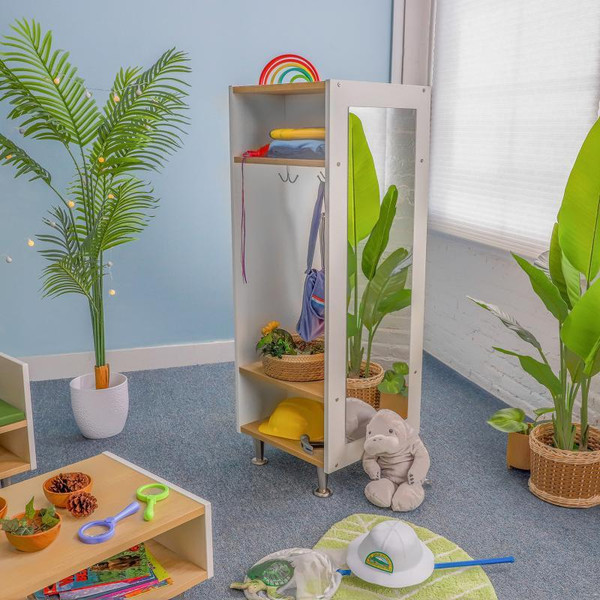
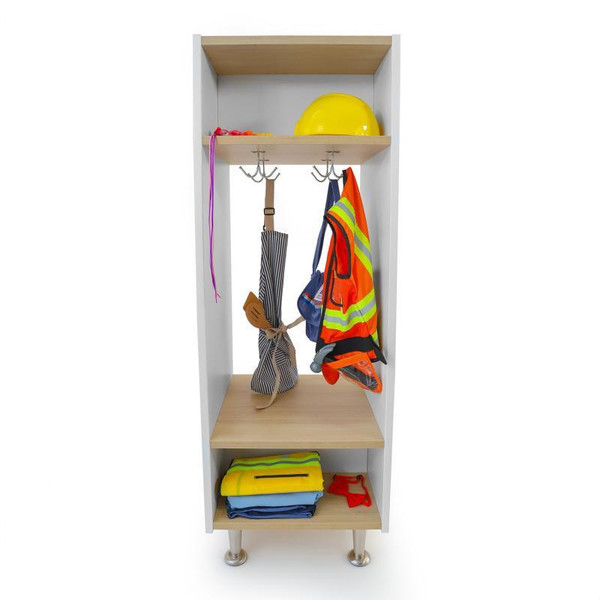
elevatED™ Dress Up Station
WB1985$488.86$537.75elevatED™ Dress Up Station - Modern Dramatic Play Storage with Mirror The elevatED™ Dress Up Station delivers a stylish, child-centered update to a classroom favorite. With refined materials,... -

 - 5%Made in USA- 5%Made in USA
Mobile Dress Up Storage with Mirrors - RTA
CF-AG1076$445.50$470.25Mobile Dress Up Storage with Mirrors - Dramatic Play Organizer for Imaginative Fun Mobile Dress Up Storage with Mirrors brings fun, style, and smart storage to any play space. This dress up storage... -

 - 5%Made in USA- 5%Made in USA
2-Position Dress Up Mirror - RTA
CF-AG1126$222.75$235.132-Position Dress Up Mirror - Shatter-Resistant Mirror for Dramatic Play 2-Position Dress Up Mirror gives kids a fun and safe way to explore and learn. This dress up mirror for kids works in both play... -

 - 5%Made in USA- 5%Made in USA
Mobile Dress Up Storage with Mirrors - Assembled
CF-AG1076A$519.75$548.63If there's a perfect piece of furniture for every activity, our Mobile Dress Up Storage with Mirrors is definitely one of them. Featuring shatterproof, full-length mirrors on each side, it allows... -

 - 11%Made in USA- 11%Made in USA
Mobile Dress-Up Center With Bins
0926JC$929.56$1,038.92This Mobile Dress-Up Center With Bins is a must-have for any play area or classroom looking to encourage creative play and organization. By keeping costumes and accessories neatly stored and easily... -

 - 11%Made in USA- 11%Made in USA
Dress-Up Storage Center with Colored Tubs
0909JC$843.71$942.97Transform your dress-up area with this innovative storage unit designed to optimize space. Equipped with five double coat hooks for hanging costumes and six colored tubs for storing smaller... -

 - 11%Made in USA- 11%Made in USA
Dress-Up Locker
4679JC$588.03$657.21Maximize your storage space and keep your child's costumes and pretend-play accessories organized with this innovative kids dress-up locker. Designed with efficiency in mind, this compact locker... -

 - 11%Made in USA- 11%Made in USA
Large Dress-Up Island
09121JC$582.59$651.13Take your child's play space to new heights with the captivating Large Dress-Up Island. Designed with a built-in full-length mirror, this island empowers your little one to unleash their creativity... -

 - 11%Made in USA- 11%Made in USA
Preschool Dress-Up Island
09102JC$514.42$574.94Elevate your child's play space with the delightful Preschool Dress-Up Island. Featuring a built-in full-length mirror, this island allows your little one to showcase their creativity and style while... -

 - 11%Made in USA- 11%Made in USA
Small Dress-Up Island
09101JC$464.44$519.08Transform your child's play area with this charming Small Dress-Up Island. This island comes equipped with a convenient full-length mirror that is permanently mounted, perfect for your little one to... -

 - 10%Made in USA- 10%Made in USA
Toddler Dress Up Center
WB0880$329.00$367.00Toddler Dress Up Center - Compact Dress-Up Storage & Shatterproof Mirror for Early Learners Encourage imagination, independence, and storytelling with the Toddler Dress Up Center-a perfectly sized... -

 - 10%Made in USA- 10%Made in USA
Dress Up Mirror Wardrobe
WB0885$499.99$557.00Dress Up Mirror Wardrobe - Kids' Dress-Up Storage & Shatterproof Mirror Station Transform imaginative playtime with the Dress Up Mirror Wardrobe, a beautifully crafted all-in-one station designed to...
Our pretend dress up centers provide a dedicated space for children to engage in creative role play using costumes that reflect real-life and imaginative roles. Often found in classrooms and shared play spaces, these centers support social development, communication, and collaborative play. Built for regular use, dress up centers help maintain organization while encouraging imaginative exploration.
Frequently Asked Questions About Pretend Dress Up Centers
(:1f476:) What ages benefit most from dress up centers?
Dress up play is especially powerful from about 2–7 years, when pretend play, language, and social skills are rapidly developing. Toddlers enjoy simple hats and capes; preschoolers and early elementary children create complex storylines with multiple characters and rules.
(:1f9e0:) What skills do dress up centers help develop?
They build language (dialogue, new vocabulary), social-emotional skills (empathy, cooperation, conflict resolution), planning and problem-solving (setting up scenes), and fine-motor skills (buttons, zippers, snaps). Kids also practice symbolic thinking—using props and costumes to stand in for real-world people and situations.
(:1f3e5:) How can dress up play help kids process big feelings and fears?
By “playing out” visits to the doctor, emergencies, school, or family situations, children safely rehearse and reframe events that might otherwise feel scary or confusing. Taking the role of the helper (doctor, firefighter, parent) gives them a sense of control and supports emotional regulation.
(:1f9fa:) What should a well-designed dress up center include?
A mix of open-ended pieces (hats, scarves, vests, bags) plus role-specific items (lab coats, aprons, hard hats, cloaks), a low mirror, simple hooks/wardrobe, and a few related props (stethoscopes, menus, clipboards). Including diverse costumes and dolls helps children see different cultures and family types represented, which supports inclusion and identity development.