Sensory Learning Activities for ADHD Homeschool Children
Table of Contents
- Homeschooling a child with ADHD? Traditional sit-still methods might actually be working against their brain's natural learning style. Discover why movement and sensory input could be the missing piece that transforms daily learning struggles into breakthrough moments.
- Why Movement and Touch Transform ADHD Learning
- Build Your Child's Daily Sensory Diet
- Multi-Sensory Teaching That Works
- Calming Activities That Improve Focus
- Structure Short Lessons Around Natural Energy
- Track and Adapt Your Sensory Approach
- Start With These Five Essential Sensory Tools
- FAQs
Homeschooling a child with ADHD? Traditional sit-still methods might actually be working against their brain's natural learning style. Discover why movement and sensory input could be the missing piece that transforms daily learning struggles into breakthrough moments.
Key Takeaways:
- Sensory learning activities that combine movement, touch, and multi-sensory input can dramatically improve focus and self-regulation for children with ADHD in homeschool settings
- A structured "sensory diet" incorporating morning wake-up activities, midday heavy work, and evening wind-down routines helps maintain optimal learning states throughout the day
- Short lesson bursts paired with movement breaks and hands-on activities work better than traditional sit-still methods for ADHD learners
- Creating a dedicated sensory corner with calming tools provides an essential reset space when overwhelm strikes during schoolwork
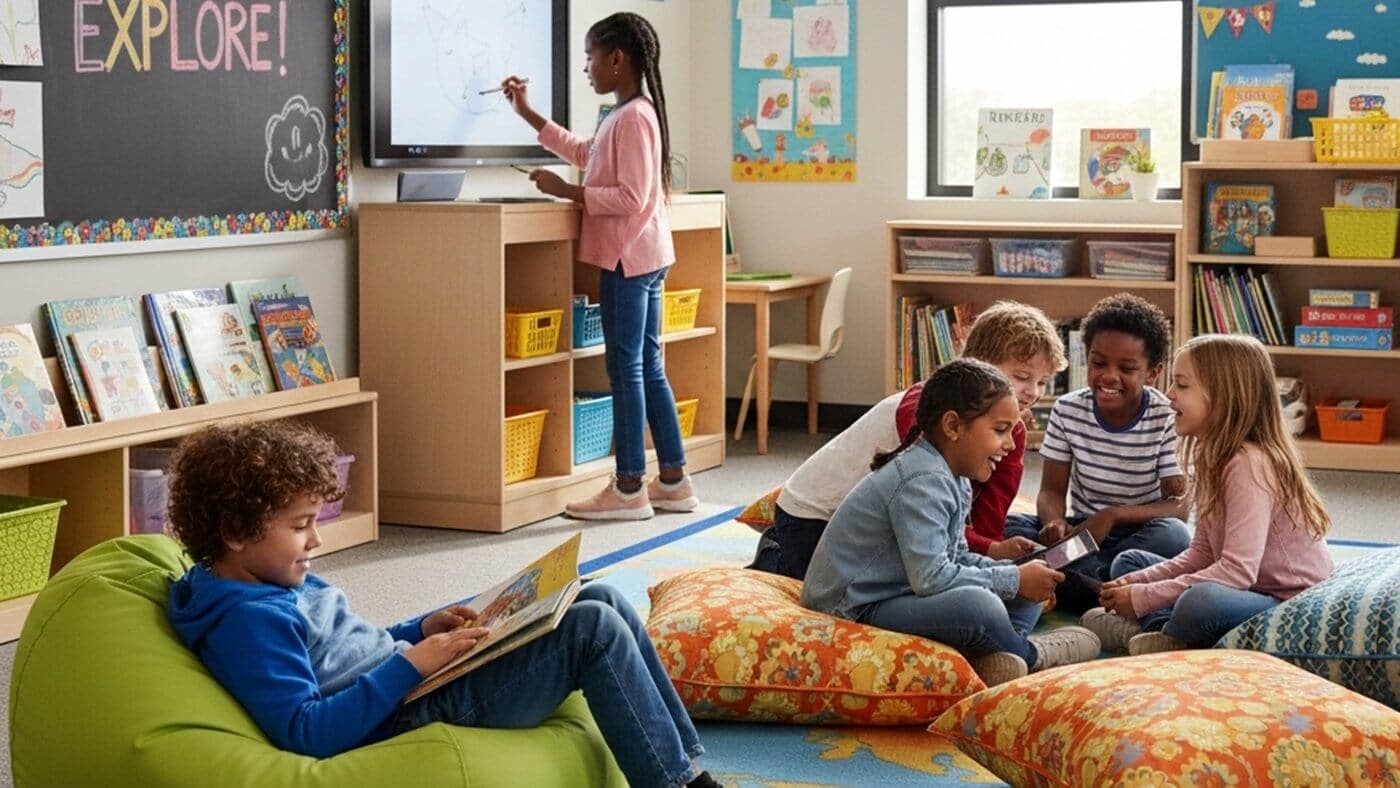
Homeschooling children with ADHD opens up incredible opportunities to tailor learning experiences around their unique sensory needs. Unlike traditional classrooms where movement and touch are often discouraged, homeschool environments can welcome the natural learning styles that help ADHD brains thrive.
Why Movement and Touch Transform ADHD Learning
Children with ADHD process information differently than neurotypical learners. Their brains crave sensory input to maintain optimal attention and regulation levels. When forced to sit still and focus without adequate sensory stimulation, many ADHD children actually become less able to concentrate and retain information.
Multi-sensory learning creates stronger neural pathways for information retention by engaging sight, sound, and touch simultaneously. Studies indicate that kinesthetic learners benefit from movement-based activities, whether it's standing while doing math problems or using sidewalk chalk for spelling practice. Little People's Cove offers educational toys and resources that support these hands-on learning approaches for children with diverse needs.
The key insight is that movement and tactile experiences aren't distractions for ADHD learners—they're essential tools that help regulate the nervous system and prepare the brain for focused learning. When children can fidget with thinking putty during read-alouds or bounce on an exercise ball while completing worksheets, their ability to process and remember information often improves dramatically.
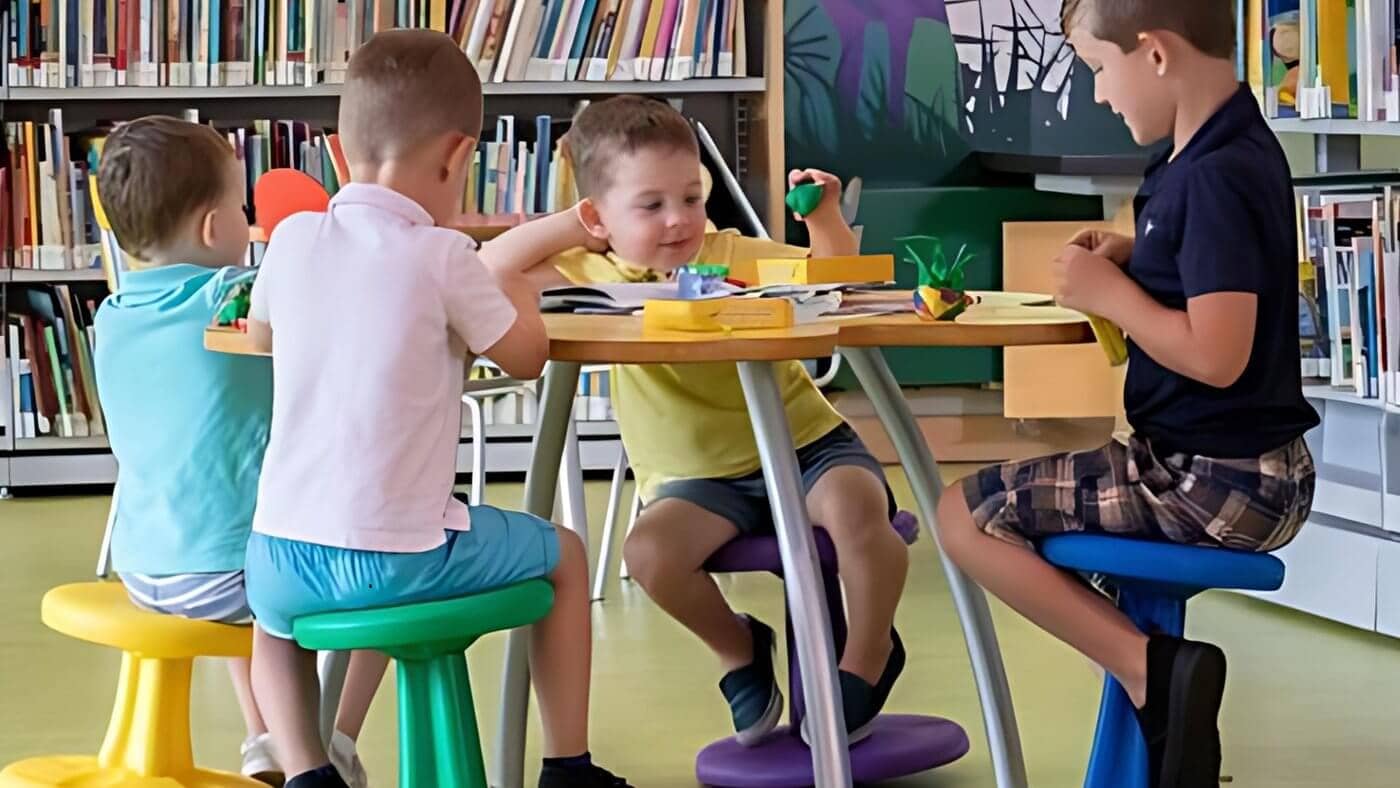
Active Learning Floor Wobbler Balance Disc
$45.54
Commercial-Grade Balance Disc for Classrooms & Therapy - Heavy-Duty Active Seating Designed for environments where equipment must perform day after day, the Commercial-Grade Balance Disc… read more
Shop Now!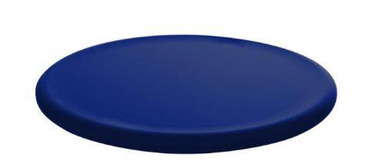
Build Your Child's Daily Sensory Diet
A sensory diet is a carefully planned menu of activities designed to keep your child's nervous system regulated throughout the day. Think of it as nutritional planning for the sensory system—providing the right types and amounts of input to maintain that sweet spot of "calm but alert" that optimizes learning.
1. Morning Wake-Up Activities
Start each school day with 5-10 minutes of alerting activities that help shift your child's nervous system into an active, ready-to-learn state. Trampoline jumping provides excellent vestibular input while engaging large muscle groups. Animal walks like bear crawls or crab walks combine movement with proprioceptive input that many ADHD children find organizing.
Simple stretching routines or yoga sequences can also serve as effective morning regulators. The key is consistency—establishing this as a non-negotiable part of your daily routine helps set expectations and creates a natural transition into learning time.
2. Midday Heavy Work Breaks
Heavy work activities provide deep pressure input that helps reset the nervous system when attention starts to wane. These activities engage large muscle groups and provide proprioceptive feedback that many ADHD children find calming and organizing.
Practical heavy work options include carrying laundry baskets, doing wall push-ups between lessons, or wearing a lightly weighted backpack during chore time. Vacuuming with a heavy vacuum cleaner combines the sensory benefits of deep muscle work with the rhythmic noise that some children find focusing.
3. Evening Wind-Down Routines
Calming sensory activities help transition from the stimulation of the school day toward rest and sleep. Warm baths provide both deep pressure and temperature regulation. Weighted blankets or lap pads during evening reading time offer sustained deep pressure input.
Gentle sensory materials like therapy putty or stress balls can provide just enough tactile input to satisfy sensory-seeking behaviors without being overstimulating before bedtime.
4. Working with Sensory Integration Therapists
While many sensory strategies can be implemented at home, consulting with an occupational therapist trained in sensory integration can provide valuable insights into your child's specific needs. These professionals can help identify whether your child tends toward sensory seeking or sensory avoiding behaviors and customize recommendations accordingly.
A formal sensory evaluation can reveal subtle patterns that might not be obvious to parents, such as underlying vestibular processing differences that affect attention and learning.
Multi-Sensory Teaching That Works
Effective ADHD education combines multiple sensory channels to reinforce learning and maintain engagement. Rather than fighting against your child's need for sensory input, these approaches harness it as a learning tool.
1. Tactile Learning for Literacy
Transform traditional pencil-and-paper exercises into rich tactile experiences. Have children trace letters in sand trays, rice bins, or shaving cream spread on cookie sheets. This provides immediate sensory feedback while reinforcing letter formation through multiple sensory channels.
Finger painting spelling words engages creativity while building muscle memory for word patterns. Acting out vocabulary words with full-body movements helps embed meaning through kinesthetic association. These approaches work particularly well for children who struggle with traditional worksheets.
2. Movement-Based Math Solutions
Mathematics becomes more accessible when abstract concepts connect to physical movement and manipulation. Use counting bears, blocks, or other manipulatives for basic operations. Create floor number cards and have children hop to answers for math facts practice.
Tossing a ball back and forth while reciting multiplication tables combines rhythmic movement with repetition. Building geometric shapes with playdough or blocks helps visualize mathematical concepts that might otherwise remain abstract.
3. Science and Language Through Touch
Sensory bins filled with rice, beans, or water beads become treasure hunts for vocabulary cards or science specimens. Children can sort materials by texture while learning descriptive language. "Digging" for sight words adds excitement to reading practice.
Nature walks provide endless opportunities for hands-on science learning. Collecting leaves, rocks, or flowers engages multiple senses while building observation skills and scientific vocabulary.
4. In-the-Moment Regulation Tools
Keep a toolkit of regulation strategies readily available during lessons. Fidget toys, wobble cushions, and therapy balls can provide ongoing sensory input without disrupting learning. Chewy or crunchy snacks offer oral sensory input that many ADHD children find regulating.
"Movement cards" with quick exercises like jumping jacks or arm circles provide structured breaks between tasks. The key is having these tools accessible and normalized as part of the learning environment rather than treating them as special accommodations.
Balance Board Set 1
$7,078.02
Commercial-Grade HABA 5-Piece Balancing Path Board Set - Built for Sensory Variety, Movement & Modular Design This complete set of five balancing boards offers a… read more
Shop Now!
Calming Activities That Improve Focus
Understanding when and how to use calming sensory input can prevent meltdowns and restore focus during challenging learning moments. These activities provide organizing input that helps reset an overstimulated nervous system.
Deep Pressure Techniques and Examples
Deep pressure input has a naturally calming effect on the nervous system. The "burrito wrap" technique involves snugly wrapping a child in a blanket (with their consent) and providing gentle "steamroller" pressure with a pillow. This can quickly shift an overwhelmed child back toward regulation.
Weighted items like lap pads or small weighted animals provide sustained deep pressure during table work. Professional guidance should be sought for appropriate weight selection and supervision requirements. Many children find this input helps them sit still and focus for longer periods.
Animal yoga poses like child's pose or happy baby provide natural opportunities for proprioceptive input while teaching self-regulation strategies. These can be practiced during transition times or as needed throughout the day.
Creating Your Sensory Corner
Designate a specific area of your homeschool space as a sensory retreat where children can go when overwhelmed or overstimulated. This space should feel distinctly different from work areas—dimmer lighting, minimal visual clutter, and soft textures.
Essential elements include a comfortable seating option like a beanbag or crash pad, weighted items for deep pressure, and a small selection of calming fidgets. Keep visual stimulation minimal and sounds muffled. This becomes a tool for teaching self-advocacy as children learn to recognize when they need a sensory break.
Structure Short Lessons Around Natural Energy
ADHD children often have natural energy cycles that, when recognized and accommodated, can dramatically improve learning outcomes. The traditional model of long, seated lessons often works against these natural rhythms.
1. Break Work Into Manageable Chunks
Studies support using short work periods followed by movement breaks for ADHD learners. Try 10-15 minute focused work sessions followed by 3-5 minute movement breaks. This prevents the buildup of restless energy that can derail longer lessons.
"Bite-sized" tasks feel more achievable and reduce the overwhelm that often accompanies large assignments. Breaking a 20-problem math worksheet into four sets of five problems with movement breaks between can transform a frustrating experience into a successful one.
2. Visual Schedules with Built-In Flexibility
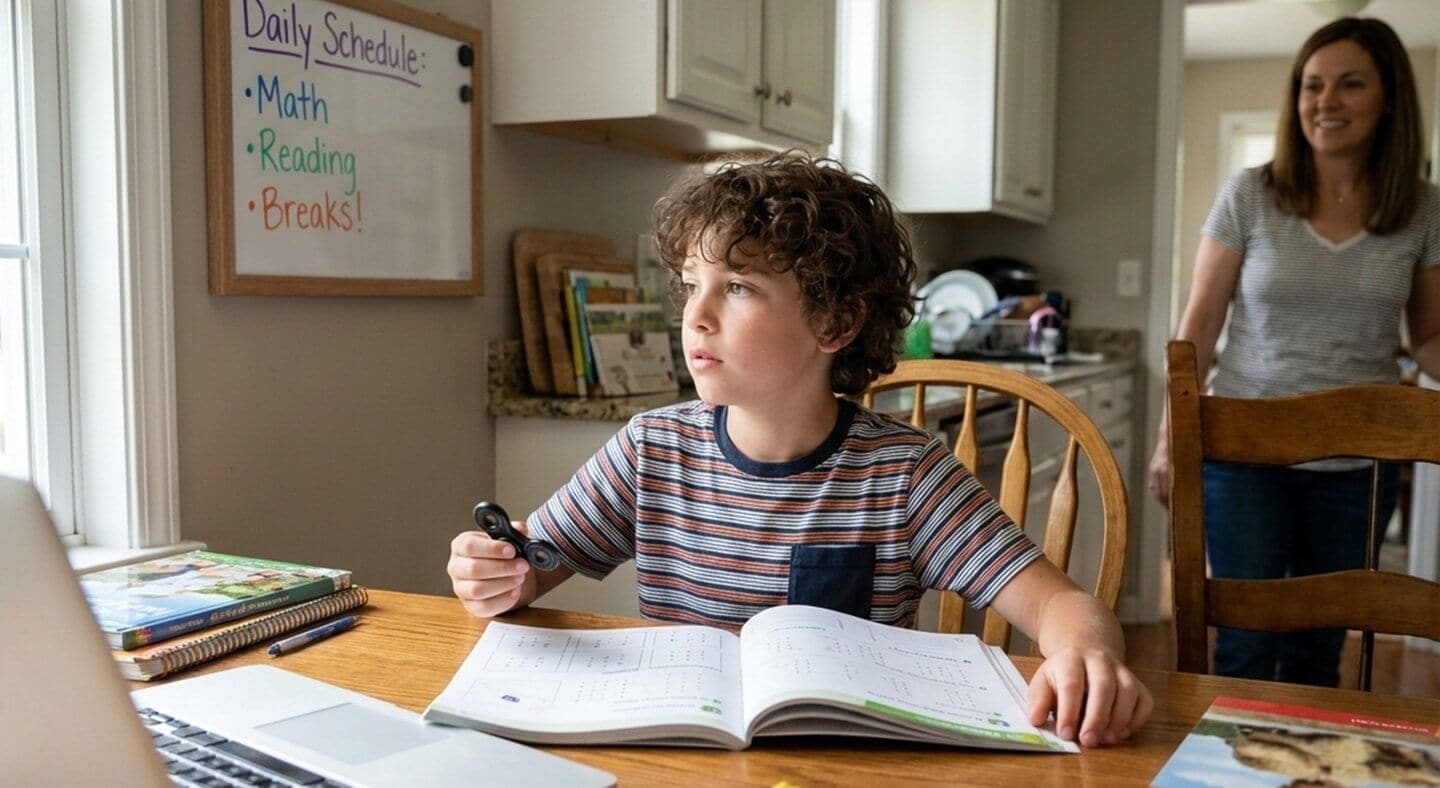
Visual schedules help ADHD children understand expectations and transition between activities. However, rigid scheduling can become a source of stress. Build in flexibility by using moveable schedule pieces or indicating "choice" times where children can select from approved activities.
Include sensory breaks as visible parts of the schedule rather than treating them as interruptions. This normalizes movement and sensory input as essential parts of the learning process.
3. Interest-Led Learning Strategies
ADHD children often demonstrate intense focus when engaged with preferred interests—a phenomenon known as hyperfocus. This state allows individuals to become deeply absorbed in activities they find engaging. Use these interests by incorporating them into academic subjects. A child fascinated by dinosaurs can practice writing by creating dinosaur fact sheets or solve math problems using dinosaur-themed word problems.
This approach works because interest-driven activities naturally provide the dopamine that ADHD brains need for sustained attention and motivation.
Track and Adapt Your Sensory Approach
Every child's sensory needs are unique, making observation and adaptation vital for success. What works for one ADHD child may not work for another, and individual needs can change over time as children grow and develop.
Keep a simple log tracking which sensory activities seem to help your child shift from "too wired" or "too sleepy" into that optimal "calm but alert" state. Note the timing, duration, and your child's response to different sensory inputs. This data becomes invaluable for refining your approach.
Watch for patterns in your child's behavior and regulation. Some children need more alerting input in the morning, while others require calming strategies first thing. Some respond well to deep pressure, while others prefer movement-based input. Let your observations guide your sensory planning rather than following a one-size-fits-all approach.
Remember that sensory needs can fluctuate based on factors like sleep, nutrition, weather, and emotional state. Building a flexible toolkit of sensory strategies allows you to respond to your child's changing needs throughout the day and across different seasons.
Start With These Five Essential Sensory Tools
Beginning your sensory learning path doesn't require a huge investment in specialized equipment. These five categories of tools provide the foundation for most successful ADHD homeschool sensory programs.
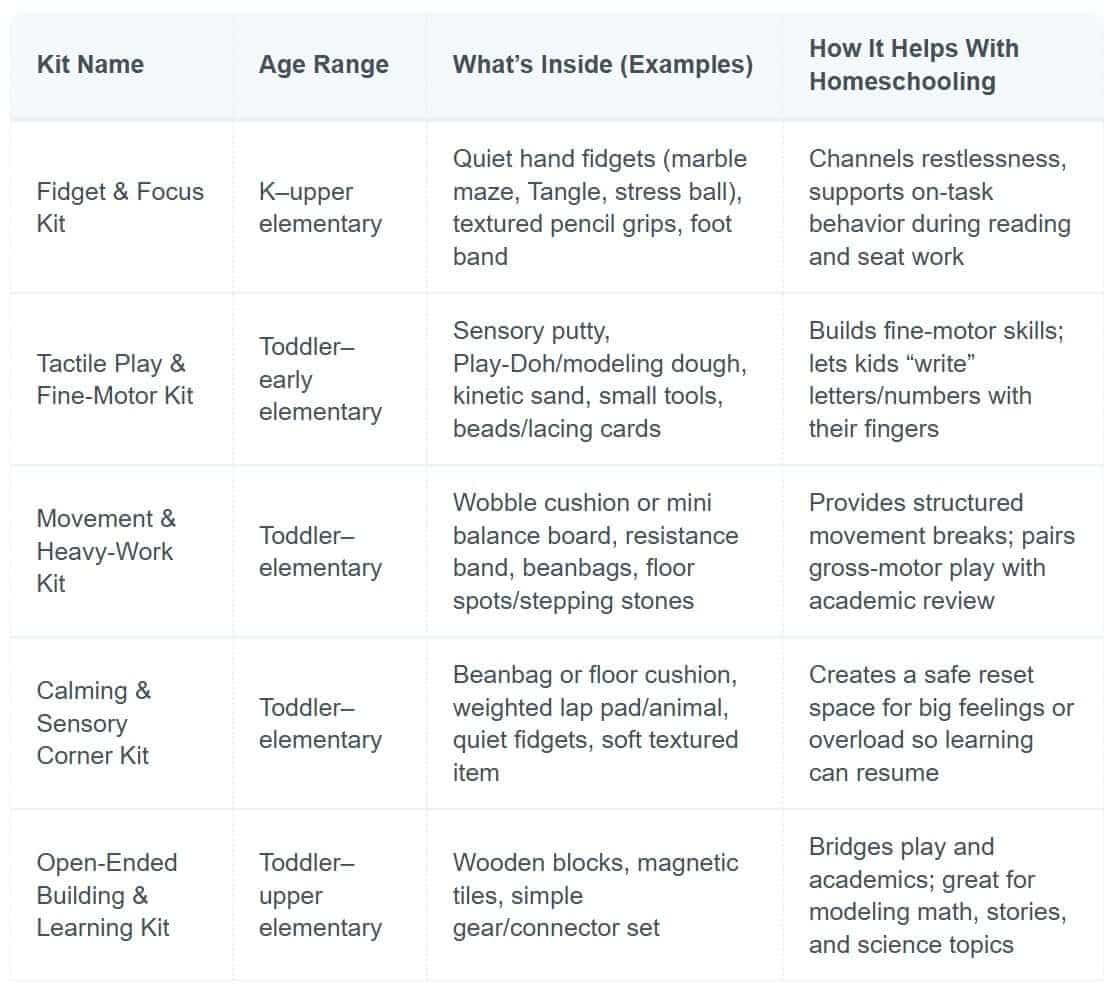
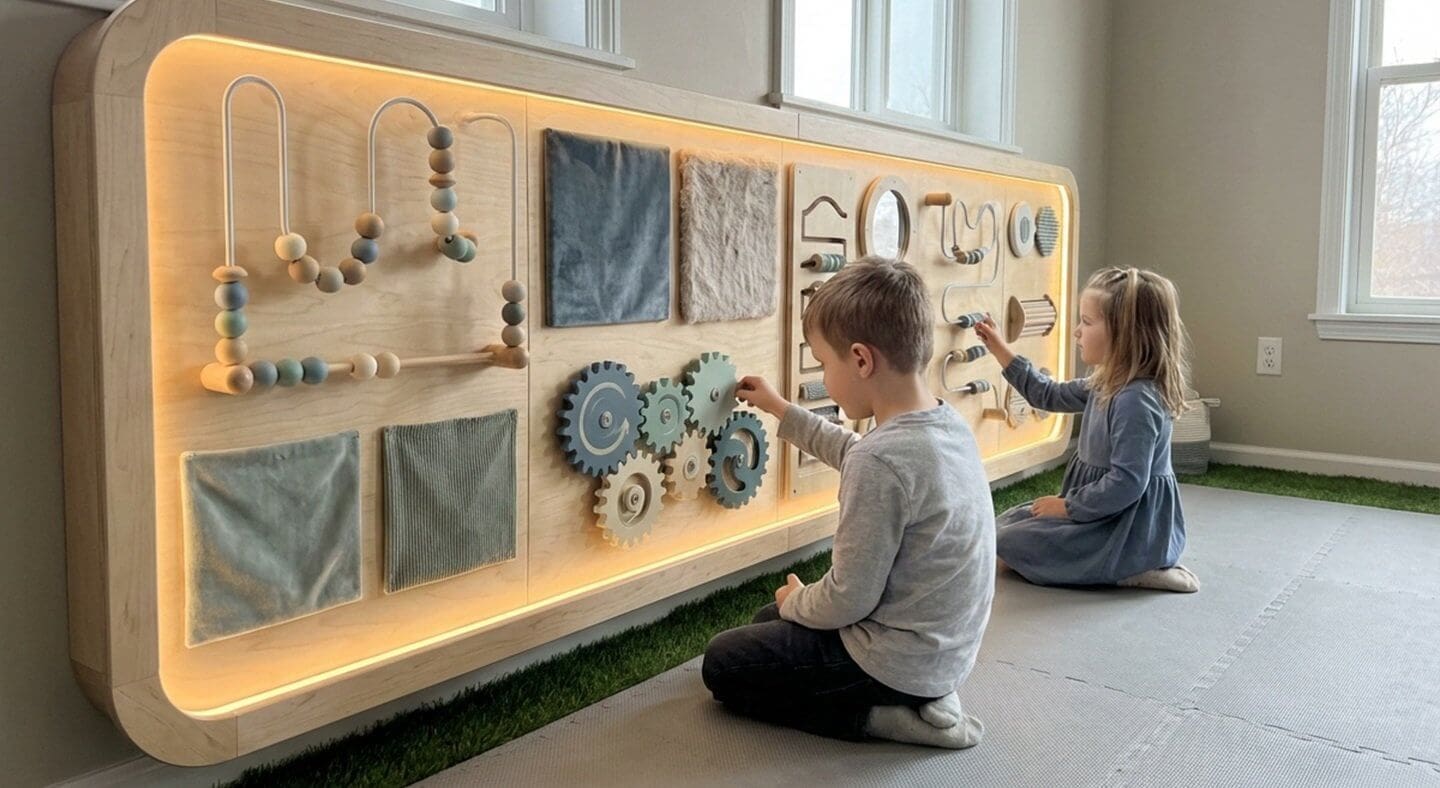
Sensory putty, Play-Doh, and kinetic sand serve multiple purposes in the ADHD homeschool environment. They keep hands busy during read-alouds, provide calming tactile input, and double as learning tools for building letters, numbers, or science models. The key is having these materials readily available and treating them as learning tools rather than just toys.
Fidgets and desk tools like stress balls, fidget cubes, marble mazes, and textured stones work best as "background tools" during seated work. The goal is to provide just enough sensory input to satisfy restless hands without becoming a distraction from the primary task. A carefully curated focus kit with 2-3 quiet fidgets often works better than a large collection.
Building and construction sets including magnetic tiles, wooden blocks, and simple STEM kits combine sensory, motor, and cognitive skills. Children can build spelling words with letter tiles, create 3D models of math problems, or use construction challenges as brain breaks between workbook tasks.
Movement and heavy work tools address the need for big-body input that many ADHD children require. Mini-trampolines, therapy balls, resistance bands, and balance boards can transform learning from a sedentary struggle into an active, engaging experience.
Calming and deep-pressure items like weighted lap pads, crash pads, and soft textured materials provide essential regulation tools for managing overwhelming moments. These items help create that vital sensory corner where children can reset and prepare to re-engage with learning.
FAQs
How do I know which sensory toys are best for my child’s specific needs (seeker vs avoider, ADHD vs autism, anxiety, etc.)?
Choosing the best sensory toys starts with noticing how your child naturally seeks or avoids input in daily life, then matching toys to those patterns rather than starting from a diagnosis label alone. A sensory seeker who craves movement, touch, or pressure usually benefits from “big input” tools like trampolines, wobble cushions, heavy‑work props (pushing, pulling, carrying), and very tactile items such as putty, textured balls, or crash pads, while an avoider who is easily overwhelmed often does better with predictable, gentle input like soft fabrics, weighted lap pads, quiet fidgets, and a simple, low‑clutter calm corner. For ADHD, prioritize tools that allow movement without derailing work—wobble seats, resistance bands on chair legs, quiet hand fidgets—whereas for autism or anxiety, emphasize calming, organizing input such as deep pressure, rhythmic rocking, and a small set of familiar textures. A practical approach is to pick 1–2 items from each category (movement, touch, deep pressure) and watch what actually helps your child become “calm but alert” before, during, and after schoolwork, then gradually invest more in the kinds of tools that consistently improve focus, mood, and recovery from overwhelm; if you have access to an OT, ask them to help translate your child’s profile into a simple home “sensory menu” so toys become targeted supports instead of random clutter.
When should my child use sensory toys—only for breaks, or while they’re doing schoolwork too?
Sensory toys can be helpful both during schoolwork and during breaks, but how and when you use them matters more than choosing one or the other. During lessons, quiet, low‑distraction tools like simple fidgets, putty, a wobble cushion, or a resistance band on the chair can give needed input while your child listens, reads, or works at the table, and many educators describe these as “while‑working tools” that help kids stay in that “calm but alert” zone instead of constantly getting up. Break times are better for bigger, more intense sensory input—jumping, swinging, obstacle courses, or messy tactile play—which can reset a dysregulated nervous system and make it easier to come back to focused tasks, and several guides for autistic and ADHD learners recommend building these activities into predictable routines (morning warm‑up, mid‑lesson movement, after‑school decompression) rather than using them only as a last resort during meltdowns. A useful rule of thumb is: small, quiet tools are welcome “on the job” as long as they help work go better, while large or very stimulating activities live in short, planned breaks before focus‑heavy subjects or after you see signs of overload, and you can adjust the balance by watching when your child is most regulated and learning well.
How can I tell if a sensory tool is actually helping my child’s focus and regulation versus just entertaining them?
A sensory tool is helping when you see a consistent before‑and‑after difference in how your child starts, sticks with, and recovers from schoolwork, not just in how excited they are about using it. Helpful tools are linked to clear, functional changes: your child gets started faster, needs fewer prompts, stays at the table longer, has fewer meltdowns, or comes back from breaks more regulated and ready to learn. If a tool is “working,” you’ll usually notice that, after a brief adjustment period, your child can still follow directions, make progress on tasks, and transition away from the tool without a huge fight. In contrast, if the item is mainly entertainment, you’ll see lots of novelty‑seeking (switching toys, asking for more time), more distraction than productivity, and bigger battles when you try to put it away. A simple way to decide is to track a few days of use: choose one or two specific goals (for example, “complete a 15‑minute reading block with only one reminder” or “return from a break without a meltdown”), use the sensory tool during those times, and note briefly whether those goals are getting easier to meet—if yes, the tool is functioning as support; if not, it may need different rules, timing (break vs work), or to be swapped out altogether.