
Our outdoor sensory tables are activity tables designed to support sensory exploration through pouring, scooping, splashing, and experimenting with water. Commonly used in playgrounds, schoolyards, and shared outdoor play spaces, these tables allow children to experience water movement, texture, and flow through open-ended play. Built for durability and outdoor use, outdoor sensory tables encourage curiosity, cooperation, and hands-on sensory discovery in an engaging outdoor setting.
Products List
-
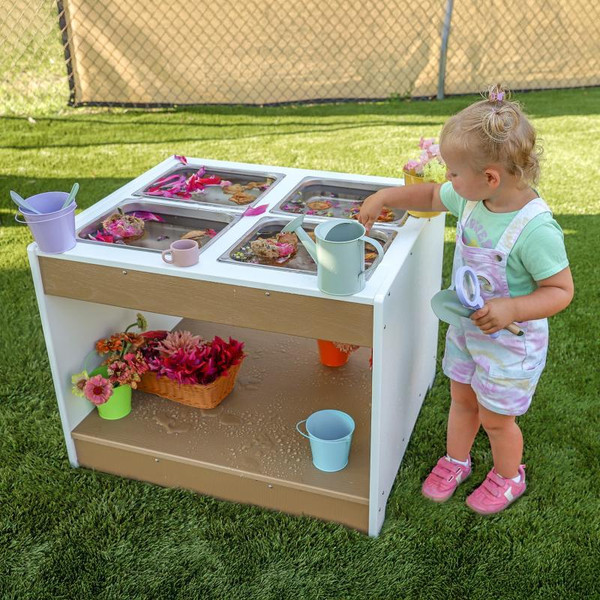
 - 9%Made in USA- 9%Made in USA
outdoorED™ Sensory Table
WB2723$1,953.27$2,148.60outdoorED™ Sensory Table - Outdoor Sensory Exploration for Preschool Learning The outdoorED™ Sensory Table is thoughtfully designed to promote hands-on sensory exploration in outdoor learning environments. Accommodating up to four... -

 - 9%Made in USA- 9%Made in USA
outdoorED™ Potion Station Sensory Table
WB2727$1,288.12$1,416.93outdoorED™ Potion Station Sensory Table - Outdoor Mixing and Exploration Workstation The outdoorED™ Potion Station Sensory Table invites children to mix, measure, explore, and experiment outdoors through hands-on discovery. Designed for... -

 - 9%Made in USA- 9%Made in USA
outdoorED™ Big and Wide Sensory Table
WB2728$1,913.02$2,104.32outdoorED™ Big and Wide Sensory Table - Outdoor Exploration and Sensory Play Station The outdoorED™ Big and Wide Sensory Table invites children to explore, experiment, and create in outdoor learning environments. Designed for versatility and... -

 - 11%Made in USA- 11%Made in USA
Sensory Sandbox for Outdoors
PP-11615$2,232.00$2,511.00Kids ready to play in the sand? This sandbox is designed so children can stand outside and play in the sand with their hands, keeping the mess to a minimum! Made from durable HDPE plastic panels, it includes a lid to cover the top and help keep the... -

 - 11%Made in USA- 11%Made in USA
EverPlay Kid's Outdoor Workbench
8345JC460$2,126.70$2,376.90Children will absolutely love the EverPlay™ Kid's Outdoor Workbench for creating, planting, and experimenting. With ample surface area, the possibilities for imaginative play are endless. Made from recycled milk jugs, EverPlay™ items are... -

 - 5%Made in USA- 5%Made in USA
Neptune Sand & Water Table - 18"h
CF-1136-18$276.71$292.09Neptune Sand & Water Table - Dual-Compartment Sensory Play Table (18″H) Enhance outdoor and indoor learning spaces with the Neptune Sand & Water Table - 18″H, a durable sensory station designed for hands-on discovery. Featuring sand... -

 - 5%Made in USA- 5%Made in USA
Neptune Sand & Water Table - 24"h
CF-1136-24$276.71$292.09Neptune Sand & Water Table - Outdoor Sensory Play Table (24″H) The Neptune Sand & Water Table - 24″H is a durable, versatile sensory table designed to inspire hands-on exploration through sand and water play. Ideal as an outdoor... -

 - 5%Made in USA- 5%Made in USA
Neptune Sensory Table and Lid Set - 18"h
CF-1138-18$375.71$396.59Neptune Sensory Table and Lid Set - Double-Basin Water & Sand Table (18″H) The Neptune Sensory Table and Lid Set - 18″H delivers hands-on discovery at an accessible height for younger learners. Designed as a double-basin sensory table,... -

 - 5%Made in USA- 5%Made in USA
Neptune Sensory Table and Lid Set - 24"h
CF-1138-24$375.71$396.59Neptune Sensory Table and Lid Set - Double-Basin Water & Sand Table (24″H) The Neptune Sensory Table and Lid Set - 24″H delivers engaging, mess-contained sensory exploration at an accessible price point. Designed as a double-basin sensory... -

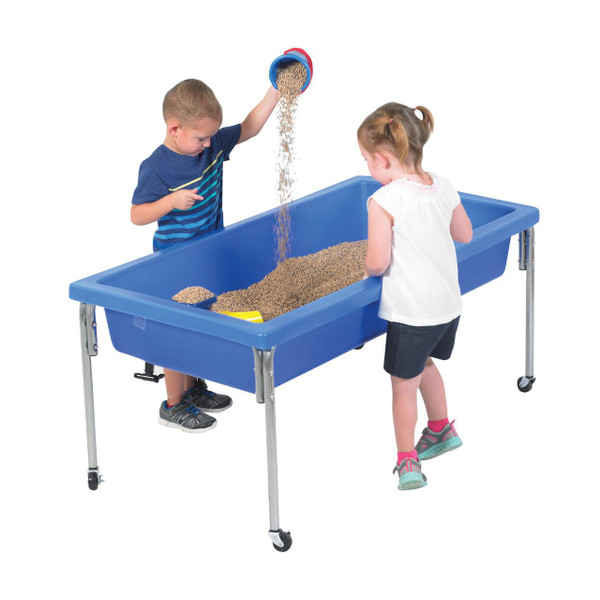 - 5%Made in USA- 5%Made in USA
Sensory Activity Table and Lid Set - 18"h
CF-1150-18$509.85$538.18Activity Table and Lid Set - Extra-Large Sensory Play Table (18″H) The Activity Table and Lid Set - 18″H provides a calming, hands-on sensory experience designed for group play. Ideal as a sensory activity table, sand and water table, and... -

 - 5%Made in USA- 5%Made in USA
Children's Activity Table and Lid Set - 24"h
CF-1150-24$509.85$538.18Activity Table and Lid Set - Extra-Large Sensory Play Table (24″H) The Activity Table and Lid Set - 24″H creates a calming, hands-on sensory station for group play indoors or outdoors. Ideal as a sensory activity table, sand and water table,... -

 - 4%Made in USAQuick Ship- 4%Made in USAQuick Ship
Youth Sand and Water Activity Center
CB-S9224$479.95$497.84Youth Sand & Water Activity Center - Original Mobile Sensory Table for Classrooms Discover the classic that started it all with the ChildBrite® Youth Sand & Water Activity Center, a proven favorite in early learning environments. Designed for... -

 - 8%Made in USAQuick Ship- 8%Made in USAQuick Ship
Sand and Water Activity Center w/Casters
CB-S9424$447.42$485.77Youth Sand & Water Activity Center - Original Mobile Sensory Table for Classrooms Experience the classic that started it all with the ChildBrite® Youth Sand & Water Activity Center, a trusted, original design that continues to deliver years... -

 - 5%Made in USA- 5%Made in USA
Multi-Colored Kidfetti Play Pellets
CF910-059$118.80$125.40Multi-Colored Kidfetti® Play Pellets - Sensory Fill (10 lb) Spark hands-on exploration with Multi-Colored Kidfetti® Play Pellets, a vibrant sensory material designed for clean, engaging play. Ideal for sensory play pellets, tactile learning... -

 - 5%Made in USA- 5%Made in USA
Sand Kidfetti Play Pellets
CF910-062$118.80$125.40Kidfetti® Play Pellets - Neutral 2-Tone Sensory Fill (10 lb) Encourage hands-on discovery with Kidfetti® Play Pellets, a clean, reusable sensory material designed for open-ended exploration. Ideal for sensory play pellets, tactile learning... -

 - 8%Made in USAQuick Ship- 8%Made in USAQuick Ship
Youth Sand & Water Center, S6224
CB-S6224$352.94$383.19Youth Sand & Water Center S6224 - Original ChildBrite® Multi-Purpose Sensory Table Designed as ChildBrite's original sand and water table, the Youth Sand & Water Center S6224 delivers exceptional versatility for active learning environments... -

 - 8%Made in USAQuick Ship- 8%Made in USAQuick Ship
Toddler Sand and Water Activity Center (Clear Liner)
CB-S9018$429.05$465.82Toddler Sand & Water Activity Center - Clear-Liner Sensory Table for Early Learning Invite hands-on discovery with the Toddler Sand & Water Activity Center, a thoughtfully designed sensory table that turns everyday play into meaningful learning... -

 - 7%Made in USAQuick Ship- 7%Made in USAQuick Ship
All-In-One Sand and Water Activity Center - 24"H
CB-S88024$269.27$289.64All-In-One Sand & Water Activity Center - 24"H Outdoor Sensory Table Designed for hands-on fun and lasting durability, the All-In-One Sand & Water Activity Center - 24"H by is a versatile outdoor sensory table that invites children to explore,... -

 - 8%Made in USAQuick Ship- 8%Made in USAQuick Ship
All-In-One Sand and Water Activity Center - 18"H
CB-S88018$245.33$266.36All-In-One Sand & Water Activity Center - 18"H Outdoor Sensory Table for Kids Designed to spark curiosity and hands-on discovery, the All-In-One Sand & Water Activity Center - 18"H combines the excitement of sand play and water play into one... -

 - 8%Made in USAQuick Ship- 8%Made in USAQuick Ship
All-In-One Sand and Water Activity Center - 8"H
CB-S88008$230.91$250.71All-In-One Children's Sand & Water Activity Center - 8"H Low-Profile Outdoor Sensory Table Designed for little learners and big imaginations, the All-In-One Children's Sand & Water Activity Center - 8"H is a versatile, low-height sensory table...
(:1f476:) What ages work best with outdoor sensory tables?
Tables suit ages 18 months–5 years; shallow basins prevent tipping for toddlers, while deeper tubs (6–8 inches) engage preschoolers scooping and pouring safely in childcare settings.
(:1f9e0:) What developmental benefits do outdoor sensory tables provide?
Sensory tables build fine motor skills (scooping, pinching), hand-eye coordination, cognitive concepts (wet/dry, full/empty), language (texture descriptions), and calming emotional regulation through repetitive motions.
(:1f6e1:)️ What safety features matter for outdoor sensory tables?
Stable steel frames, rounded edges, locking casters, non-slip feet, and 66–100 lb weight capacities prevent spills. Lids secure contents; position away from traffic with adult supervision
(:1f4cf:) What size sensory tables fit childcare playgrounds?
Compact 24x24 inch single tubs serve 2–3 toddlers; 38x24 inch double-station models handle 4–6 preschoolers. Plan 6 ft clearance around for safe group access in fenced yards.
(:1f3eb:) How do teachers use outdoor sensory tables?
Rotate fillers weekly (rice, beans, water beads); set themes like ocean rescue or farm digging. Limit 3–4 kids per table with timers promoting turn-taking during recess.
