Water Tables vs Sand Tables: Age-Specific Recommendations for Toddlers
Table of Contents
- Confused about whether your toddler needs a water table or sand table? The answer isn't one-size-fits-all—your child's age dramatically changes which sensory table will actually support their development, and choosing wrong could mean missing crucial learning windows.
- Key Takeaways
- Why Your Toddler's Age Determines Water vs Sand Play Benefits
- Water Tables: Perfect for 1-2 Year Olds
- Sand Tables: Ideal for Preschoolers 3+ Years
- Developmental Skills Both Tables Support
- Combined Sand and Water Tables: Maximum Versatility
- Choose Based on Your Child's Current Development Stage
- FAQs
Confused about whether your toddler needs a water table or sand table? The answer isn't one-size-fits-all—your child's age dramatically changes which sensory table will actually support their development, and choosing wrong could mean missing crucial learning windows.
Key Takeaways
- Water tables excel for toddlers aged 1-2 years, offering cause-and-effect learning through pouring and splashing while supporting fine motor development
- Sand tables benefit preschoolers 3+ years by building hand strength through resistance and encouraging imaginative world-building scenarios
- Both tables support mathematical concepts like volume and measurement, plus scientific learning of physics principles
- Combined sand and water tables provide maximum versatility for families with children of different ages or developmental stages
- Choosing the right sensory table depends on understanding your child's current developmental needs and play preferences
Choosing between water and sand tables often confuses parents who want the best sensory play experience for their toddlers. The decision becomes clearer when understanding how each type supports different developmental stages and skills.
| Feature | Water Table | Sand Table |
| Primary Skill | Physics (flow, displacement) | Engineering (molding, weight) |
| Mess Level | High (wet clothes/floors) | High (drifts, tracking indoors) |
| Safety Risk | Drowning (requires 100% supervision) | Choking/Eye irritation |
| Best Age | 12+ Months | 18+ Months |
Why Your Toddler's Age Determines Water vs Sand Play Benefits
The developmental benefits of sensory tables change dramatically as children grow. Research from developmental psychology shows that toddlers' fine motor skills, cognitive abilities, and sensory processing needs evolve rapidly between ages 1-4. Water tables offer fluid, dynamic play that matches younger toddlers' need for simple cause-and-effect learning. Sand tables provide the resistance and moldability that older preschoolers need for complex imaginative play and strength building.
Understanding these age-specific benefits helps parents make informed choices about which sensory table will provide the most developmental value. Little People's Cove offers detailed guides on selecting age-appropriate sensory tables that match your child's developmental stage.
The American Academy of Pediatrics emphasizes that play, including unstructured and sensory play, is crucial for healthy brain development and overall well-being, making the choice between water and sand tables a significant decision for supporting your child's growth.
See-Thru Wooden Sensory Table
$842.01
See-Thru Sensory Table - Clear Acrylic Sand and Water Table Make sensory play more exciting with the See-Thru Sensory Table! This clear acrylic sensory table… read more
Shop Now!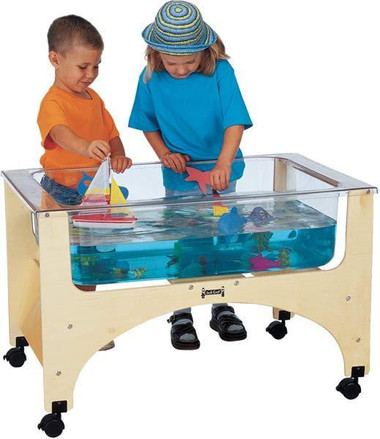
Water Tables: Perfect for 1-2 Year Olds
Water tables create ideal learning environments for younger toddlers who are just beginning to understand how their actions affect the world around them. The immediate visual and auditory feedback from water play supports crucial developmental milestones during this critical learning period.
Cause-and-Effect Learning Through Pouring and Splashing
Young toddlers aged 12-24 months thrive with water tables because every action produces an immediate, visible result. When a toddler pours water from a cup, they instantly see the water flow and hear the splash. This immediate feedback helps develop neural pathways that support logical thinking and problem-solving skills.
Water flow introduces basic physics concepts naturally. Toddlers learn that water always flows downward, that it takes the shape of its container, and that some objects float while others sink. These early scientific observations form the foundation for more complex STEM learning later.
Fine Motor Skills with Cups and Funnels
Water table activities like pouring, scooping, and using funnels strengthen the small muscles in hands and fingers that toddlers need for future writing skills. The precision required to pour water into small openings or use eye-droppers develops hand-eye coordination and bilateral coordination.
Water play with measuring cups develops fine motor skills needed for tasks like self-feeding and using utensils, while introducing concepts like "empty" and "full." These skills transfer directly to daily life activities.
Calming Sensory Regulation for Overstimulated Toddlers
Water tables provide particularly valuable sensory input for toddlers with sensory sensitivities. The predictable, soothing tactile experience of water can help overstimulated children self-regulate. The rhythmic sounds of splashing and pouring often have a naturally calming effect.
Occupational therapy resources note that water play can be especially beneficial for toddlers who struggle with sensory processing, providing the gentle, consistent input their nervous systems need to feel organized and calm.
Mini Double Discovery Sensory Table
$255.92
Mini Double Discovery Sensory Table - Toddler Sensory Play Station Make hands-on learning fun with the Mini Double Discovery Sensory Table! Designed for children ages… read more
Shop Now!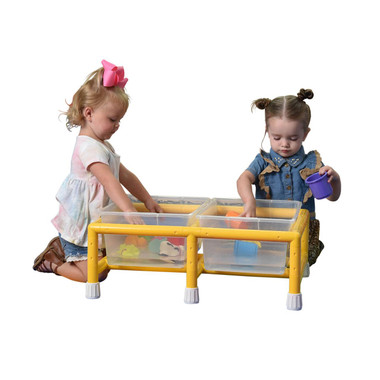
Sand Tables: Ideal for Preschoolers 3+ Years
Sand tables offer unique developmental advantages for older preschoolers who have developed the motor skills and cognitive abilities to benefit from more complex sensory experiences. The resistance and moldability of sand support advanced skill development that water cannot provide.
Building Hand and Arm Strength Through Resistance
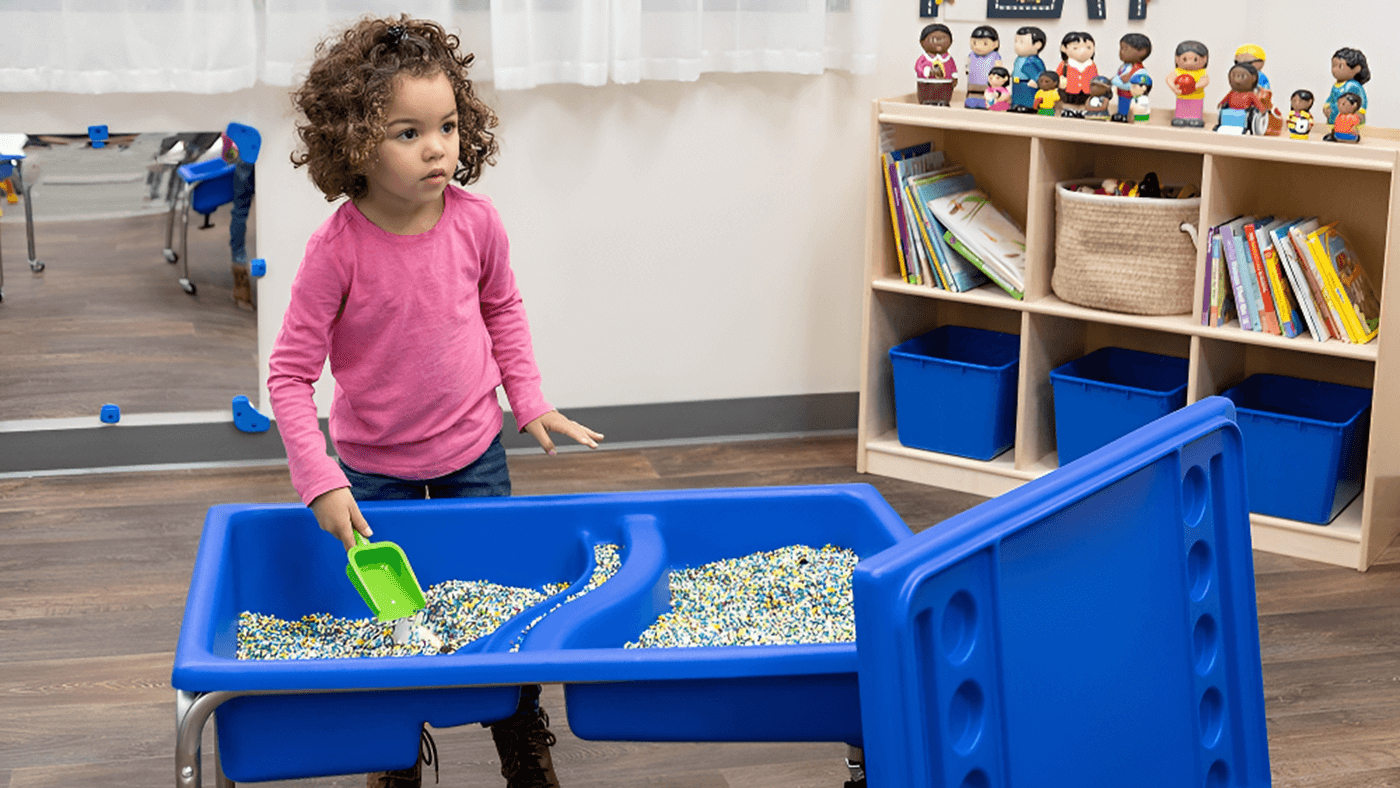
Unlike water, sand provides resistance that builds crucial muscle strength in hands, arms, and shoulders. Scooping heavy buckets of sand, digging channels, and molding structures work larger muscle groups while developing the grip strength children need for writing and other fine motor tasks.
Sand play engages proprioceptive and vestibular senses as children shift their body weight while kneeling, reaching, and manipulating materials. This sensory input supports body awareness and coordination development needed for physical confidence and motor planning.
Imaginative World-Building and Construction Play
Sand's moldable nature allows preschoolers to engage in complex constructive play that supports creativity and spatial reasoning. Children can build castles, create miniature landscapes, and construct roads for toy vehicles. This type of imaginative play develops abstract thinking and problem-solving skills.
Constructive play supports the development of cognitive skills, including concentration and attention, which are crucial for learning. Sand tables provide the perfect medium for sustained, focused play that builds these executive function skills.
Advanced Tactile Learning and Spatial Skills
Sand offers a unique dry, granular texture that provides different sensory input than water. Preschoolers can experience how sand feels when it's packed tight versus loose, wet versus dry. These tactile variations support sensory discrimination skills and scientific thinking.
The three-dimensional nature of sand play helps children understand spatial relationships, volume, and engineering principles as they build structures and solve construction challenges.
Children's Sensory Table w/Shelf
$756.50
The Sensory Table w/Shelf by Jonti-Craft is a versatile and engaging addition to any classroom or daycare setting. This sensory table is specifically designed to… read more
Shop Now!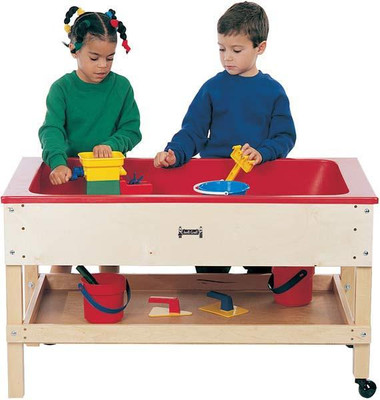
Developmental Skills Both Tables Support
While water and sand tables offer distinct advantages for different age groups, both types of sensory play support fundamental developmental skills that benefit children across age ranges.
Mathematical Concepts: Volume and Measurement
Both water and sand tables introduce early mathematical thinking through hands-on learning of volume, measurement, and comparison. Children naturally experiment with concepts like "more" and "less" as they fill containers of different sizes.
Measuring cups, buckets, and containers help children understand that one tall container might hold the same amount as two shorter ones. These concrete experiences with volume and measurement lay groundwork for formal math concepts introduced in elementary school.
Scientific Learning: Physics and Nature Study
Water tables introduce concepts like buoyancy, flow, and gravity, while sand tables teach about texture, density, and construction principles. Both provide opportunities for hypothesis testing as children predict what will happen and then observe results.
Adding natural elements like shells, rocks, or toy animals to either table creates opportunities for discussions about living and non-living things, animal habitats, and environmental science concepts.
Combined Sand and Water Tables: Maximum Versatility
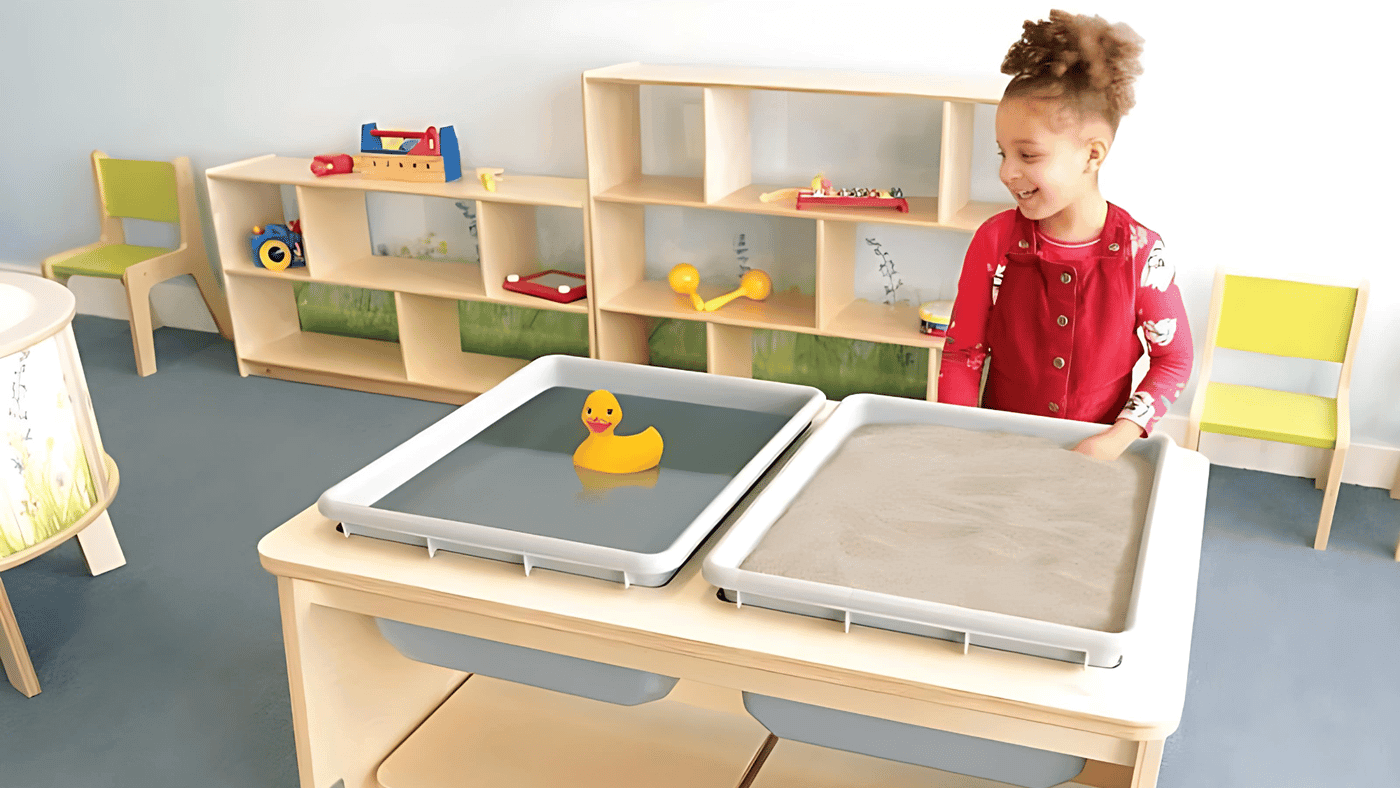
Combined sand and water tables can offer the best solution for families with children of different ages or parents who want maximum developmental benefits from a single investment. These tables typically feature separate bins that can be filled with different materials.
Combined tables can encourage social interaction and learning opportunities among children, potentially including peer mentorship, aligning with general benefits of social play. The versatility allows parents to switch materials based on their child's changing interests, developmental needs, or seasonal preferences.
Water might be perfect for hot summer days, while sand provides engaging indoor play during winter months. This flexibility makes combined tables a practical choice for many families.
Choose Based on Your Child's Current Development Stage
The most important factor in choosing between water and sand tables is understanding your individual child's current developmental stage and interests. Consider your toddler's fine motor skills, attention span, and sensory preferences when making this decision.
Children with sensory sensitivities might benefit more from the predictable, flowing nature of water tables, while children seeking more physical challenge might thrive with sand's resistance. Some children naturally gravitate toward one type of play over the other.
Developmental stages are guidelines, not rigid rules. A mature 2-year-old might benefit from sand table play, while a 3-year-old with delayed fine motor skills might still gain more from water table activities. Observe your child's interests and capabilities to guide your choice.
For expert guidance on selecting the perfect sensory table for your child's developmental needs, visit Little People's Cove, where childhood development experts provide detailed resources for creating engaging, educational play environments.
FAQs
Do water tables or sand tables provide more sensory input for kids with sensory processing needs?
Both offer valuable sensory input, but they stimulate different sensory channels — and for kids with sensory processing needs, that distinction matters. Water tables tend to be better tolerated by children with tactile defensiveness, as the sensation is fluid and diffuse rather than direct. The sound and movement of water also makes it naturally calming, which can support self-regulation. Sand tables, on the other hand, deliver a richer, more intense tactile experience with greater proprioceptive input through digging, scooping, and resistance — making them a better fit for sensory-seeking children who crave more input. In a therapy setting, having both available gives therapists the flexibility to match the sensory experience to each child's individual profile and goals in the moment.
How do you prevent mold or bacteria in a water table?
Keeping a water table clean and safe comes down to a few consistent habits. Empty and dry the table completely after every use — standing water is the fastest way to invite mold and bacterial growth. Give the basin a quick wipe-down with a diluted bleach solution or a child-safe disinfectant spray, then allow it to air dry fully before storing or covering it. Avoid leaving lids on a wet table, as trapping moisture accelerates mold growth. For classrooms and therapy settings with frequent use, a weekly deep clean is recommended. Adding a small amount of white vinegar to the water during play can also help slow bacterial growth without introducing harsh chemicals around young children. Finally, make sure any toys or tools used in the table are cleaned and dried alongside it — accessories are a commonly overlooked source of mold and buildup.
What's the difference between a commercial-grade and a regular sensory table?
The biggest difference comes down to durability and how the table holds up under daily, heavy use. Regular sensory tables are typically designed for home use — they're lighter, made from thinner plastics, and built for occasional play. They can crack, warp, or fade relatively quickly when exposed to water, sand, and cleaning products on a daily basis. Commercial-grade sensory tables are built specifically for classroom, daycare, and therapy settings where multiple children are using them throughout the day, every day. They feature thicker, more impact-resistant materials, reinforced legs, and hardware that holds up to frequent disassembly and cleaning. Many commercial models also include features that matter in professional settings — adjustable height legs to accommodate standing or wheelchair access, drain plugs for easy emptying, and lids for hygienic storage between sessions. For a home setting, a regular table may serve just fine, but for any school, therapy room, or childcare environment, a commercial-grade table is worth the investment — it's simply going to last significantly longer and maintain a safe, sanitary surface far better over time.