Why Gross Motor Play Must Come Before Fine Motor Activities
Table of Contents
- Every parent wants their child to excel at writing and precise hand tasks, but introducing fine motor toys too early often backfires. The secret lies in understanding why your child's core strength and balance actually determine handwriting success more than finger dexterity alone.
- Key Takeaways
- Large Muscles Must Develop Before Small Muscles Can Excel
- Why Your Child's Core Strength Determines Handwriting Success
- What Happens When Fine Motor Toys Come Too Early
- Key Differences Between Gross Motor and Fine Motor Activities
- Key Gross Motor Activities That Build Fine Motor Readiness
- How to Transition from Gross to Fine Motor Play
- Strong Bodies Create Confident, Capable Young Learners
- FAQs
Every parent wants their child to excel at writing and precise hand tasks, but introducing fine motor toys too early often backfires. The secret lies in understanding why your child's core strength and balance actually determine handwriting success more than finger dexterity alone.
Key Takeaways
- Large muscle development creates the foundation for precise hand control, making gross motor skills necessary before introducing fine motor toys
- Core strength and balance directly impact handwriting success and other academic tasks requiring finger precision
- Introducing fine motor toys too early can lead to frustration, poor grip patterns, and decreased confidence in children
- Specific gross motor activities like climbing and cross-body movements prepare the entire body for successful fine motor control
- Strategic transition activities combine movement with hand tasks to build both skill sets simultaneously
Every parent and educator wants to see children succeed with tasks like writing, cutting, and buttoning clothes. However, rushing into fine motor activities without proper preparation often backfires. Understanding the developmental sequence from gross to fine motor skills transforms how caregivers approach early childhood learning and play.
Large Muscles Must Develop Before Small Muscles Can Excel
The human body follows a predictable pattern called proximal-to-distal development, meaning movement control starts from the center of the body and works outward. Large muscle groups in the trunk, shoulders, and arms must gain strength and coordination before the smaller muscles in hands and fingers can perform precise movements effectively.
This developmental sequence exists for a crucial reason: stability creates mobility. When core muscles provide a stable base, arms can move with control. When shoulders are strong, hands can work with precision. Without this foundation, children struggle with tasks that require steady, controlled finger movements. Little People's Cove supports this developmental progression in their approach to early childhood physical development.
Think of this like building a house - the foundation must be solid before adding the roof. Children who skip the gross motor foundation often develop compensatory movement patterns that become difficult to correct later. Their bodies work harder than necessary, leading to fatigue and frustration during fine motor tasks.
Why Your Child's Core Strength Determines Handwriting Success
Handwriting success depends on far more than finger dexterity. The entire body works as an integrated system, with each component supporting the others. When children struggle with writing, the problem often traces back to insufficient gross motor development rather than hand weakness alone.
1. Trunk Stability Creates the Foundation for Hand Control
Core muscles act like an internal brace, providing the stability children need for controlled arm and hand movements. Weak core muscles force children to use their arms for balance instead of precision work. This creates tension that travels down to the hands, making smooth writing motions nearly impossible.
Children with strong trunk stability can sit upright without effort, freeing their arms to move independently. They maintain consistent posture during lengthy writing tasks and show better endurance for academic work. Observable signs of good trunk stability include the ability to sit without back support and maintain an upright position while reaching across their body.
2. Balance and Posture Enable Precise Finger Movements
Balance isn't just about walking a straight line - it's the foundation for all controlled movement. Children who struggle with balance unconsciously tense their entire body to maintain stability. This tension interferes with the relaxed, fluid movements needed for skilled hand tasks.
Good balance allows children to shift their weight and adjust position while maintaining hand control. They can lean forward to write, turn their paper, and reach for materials without losing their grip on writing tools. Poor balance creates a ripple effect that impacts every fine motor task throughout the day.
3. Shoulder Strength Supports Sustained Writing Activities
Strong shoulders provide the stable platform that hands need for precision work. When shoulder muscles lack strength, children compensate by gripping writing tools too tightly or using excessive pressure. This compensation leads to hand fatigue, poor letter formation, and avoidance of writing tasks.
Shoulder stability also enables proper arm positioning for writing. Children with adequate shoulder strength naturally position their arms at the correct angle and distance from their body. They can maintain this position throughout extended writing sessions without discomfort or declining performance.
4. How Occupational Therapy Improves Balance and Motor Coordination
Occupational therapists understand the vital connection between gross and fine motor development. They begin treatment by assessing and strengthening the large muscle foundation before introducing fine motor challenges. This approach prevents frustration and builds confidence as children experience success at each developmental level.
Therapeutic interventions typically include activities that challenge balance, core strength, and bilateral coordination. These activities might look like play, but they systematically address the underlying components needed for fine motor success. Therapists also educate parents and teachers about maintaining this developmental sequence at home and school.
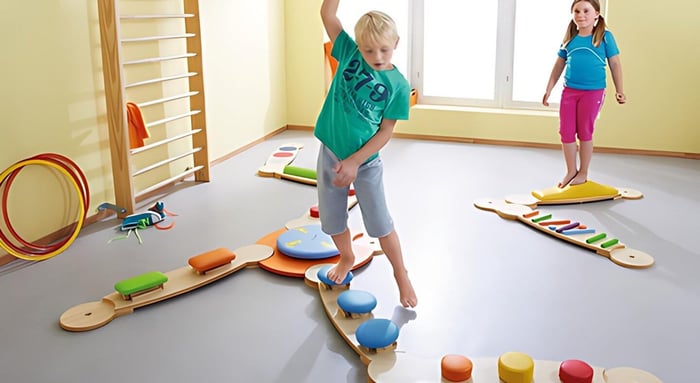
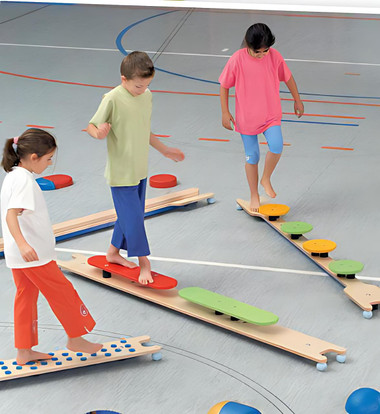
Balance Boards - Set 7
$5,751.84
Commercial-Grade HABA Balancing Board Set - Built for Years of Motor Skill Development These are not flimsy balance boards that warp or break after a...… read more
Shop Now!What Happens When Fine Motor Toys Come Too Early
The marketplace overflows with fine motor toys marketed to increasingly younger children. While these toys aren't harmful, introducing them before children have adequate gross motor foundations creates unnecessary challenges and missed opportunities for proper development.
Frustration and Avoidance of Hand-Based Activities
Children may naturally avoid activities where they frequently experience failure. When fine motor toys are introduced too early, children experience repeated failures that teach them to dislike hand-based activities. This avoidance can persist long after they develop the necessary skills, creating academic and daily living challenges.
Early frustration also impacts confidence and willingness to try new tasks. Children who associate hand activities with struggle may resist writing, art projects, and self-care tasks like buttoning or zipping. Breaking this negative cycle requires patience and often means temporarily stepping back to build gross motor foundations.
Poor Grip Patterns That Become Hard to Correct
Without adequate shoulder and arm stability, children develop compensatory grip patterns that provide the control they're missing from their larger muscles. These inefficient grips become habitual and resistant to change once established.
Common compensatory grips include whole-hand grasps on small objects, excessive finger tension, and awkward wrist positions. While these patterns might allow children to complete tasks initially, they limit speed, endurance, and precision as demands increase. Correcting established grip patterns requires intensive intervention and may never fully resolve.
Daily Task Difficulties That Impact Confidence
Fine motor skills affect countless daily activities beyond academics. Children with inadequate foundations struggle with dressing, eating, and personal hygiene tasks. These difficulties create dependence on adults and impact self-esteem as children compare themselves to more capable peers.
The cumulative effect of daily struggles extends beyond motor skills to emotional and social development. Children may avoid social situations where fine motor skills are expected, miss learning opportunities, and develop learned helplessness that persists into adulthood.
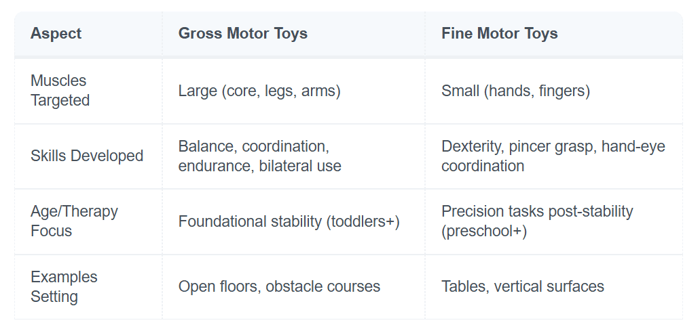
Key Differences Between Gross Motor and Fine Motor Activities
Key Gross Motor Activities That Build Fine Motor Readiness
Specific gross motor activities create the foundation children need for fine motor success. These activities target the large muscle groups and movement patterns that support hand control while providing the sensory input that organizes the nervous system for precise movements.
1. Climbing and Hanging Strengthen Everything from Back to Fingertips
Climbing activities provide complete strength training that benefits the entire kinetic chain. Supporting body weight through the arms builds shoulder girdle stability while grip strength develops naturally through functional use. The proprioceptive input from climbing also improves body awareness needed for controlled movements.
Hanging activities specifically target the muscles that support sustained grip strength. Children who can hang from playground equipment for appropriate durations typically show better endurance for writing and other fine motor tasks. The graduated challenge of different climbing structures allows for progressive skill development.
2. Balance Beams Build Core Strength and Mental Focus
Balance beam activities challenge multiple systems simultaneously. Core muscles engage to maintain stability while the nervous system integrates sensory information for position awareness. This integration improves the body-brain connection needed for coordinated movement patterns.
The mental focus required for balance activities translates directly to fine motor tasks. Children learn to attend to their body position and make subtle adjustments - skills that transfer to maintaining proper posture and hand position during writing and other precision tasks.
3. Push and Pull Activities Prevent Injury While Building Performance
Push and pull activities develop bilateral coordination and core stability while building functional strength patterns. These activities teach children to coordinate both sides of their body while maintaining central stability - a pattern needed for tasks like cutting with scissors or writing while stabilizing paper.
The resistance training aspect of push and pull activities builds the muscle endurance needed for sustained fine motor work. Children develop the strength to maintain grip pressure and hand position throughout lengthy tasks without fatigue or declining performance.
4. Cross-Body Movements Activate Both Brain Hemispheres
Cross-lateral movements, where limbs cross the body's midline, stimulate communication between brain hemispheres. This communication improves cognitive processing and motor planning abilities that support complex fine motor sequences.
Activities like crawling, marching with opposite arm and leg, and reaching across the body prepare the nervous system for tasks that require crossing midline - needed for writing across a page, cutting along lines, and many self-care activities. Regular cross-lateral movement also supports reading and other academic skills, though research continues to examine these connections.
Manipulation Sensory Wall Panel

$131.10
Manipulation Sensory Wall Panel - Fine Motor Skills for Coordination Play The Manipulation Sensory Wall Panel offers hands-on play for growing skills. This sensory wall...… read more
Shop Now!How to Transition from Gross to Fine Motor Play
The transition from gross to fine motor activities doesn't happen overnight. Strategic planning ensures children maintain their large muscle foundation while gradually introducing more precise movement challenges. This balanced approach prevents regression while building new skills.
Combining Movement with Hand Activities
The most effective transition activities incorporate both gross and fine motor elements within single tasks. Children might complete an obstacle course that ends with a puzzle or drawing activity, maintaining their movement foundation while practicing precision skills. This combination prevents the static positioning that can undermine postural control.
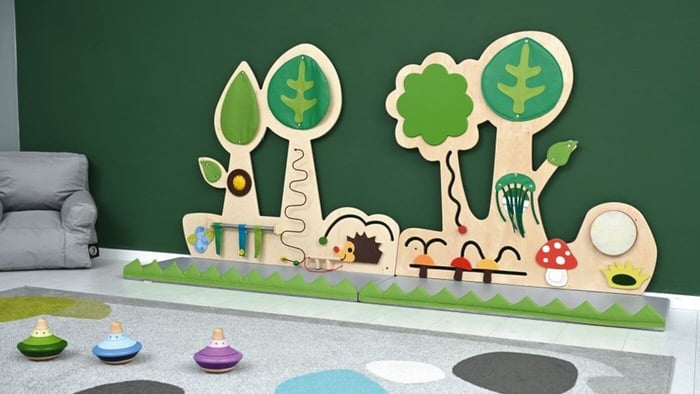
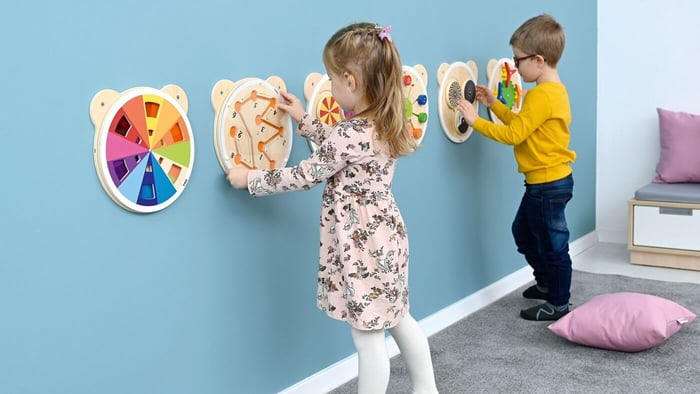
Activities like wall-mounted busy boards or standing art easels allow children to engage fine motor skills while maintaining active postures. The movement component keeps large muscles engaged while hands practice precise manipulations. This approach builds endurance and prevents the fatigue associated with prolonged sitting.
Creating Activity Circuits That Build Both Skills
Circuit-style activities rotate children between gross and fine motor stations, maintaining engagement while systematically building both skill sets. Circuits might include crawling through tunnels, balancing on beams, then completing table-based activities like threading or block building.
The key to successful circuits lies in the sequence and timing. Gross motor activities should activate and organize the nervous system before fine motor challenges. Brief movement breaks between precision tasks help maintain attention and prevent the tension that interferes with skilled hand use.
Strong Bodies Create Confident, Capable Young Learners
The investment in gross motor development pays dividends throughout a child's academic and social journey. Children with strong movement foundations may be more likely to approach new challenges with confidence, knowing their bodies will support their intentions. This confidence extends beyond motor skills to general learning and problem-solving attitudes.
Academic success increasingly depends on fine motor skills as children progress through school. From forming letters to using technology, precise hand control impacts learning across subjects. Children who build proper foundations early handle these demands with ease, freeing mental energy for higher-level thinking and creativity.
The social benefits of motor competence can't be overlooked either. Children who move confidently participate more fully in playground activities, sports, and group projects. This participation builds friendships and leadership skills while reinforcing the joy of physical activity that supports lifelong health and learning.
For parents, educators and therapists seeking expert guidance on supporting children's motor development, Little People's Cove provides detailed resources and professional insights for building strong foundations that last a lifetime.
FAQs
How does gross motor development support the foundation for fine motor skills?
Gross motor development lays the essential foundation for fine motor skills by building the core strength, shoulder stability, coordination, and sensory regulation children need before they can use their hands with precision. When kids climb, crawl, run, and balance, they strengthen the large muscle groups that support upright posture and steady arm control—both necessary for tasks like writing, cutting, buttoning, and manipulating small toys. These big-body movements also organize the brain’s sensory systems and improve motor planning, allowing children to focus, coordinate both sides of the body, and perform detailed hand movements more effectively. In short, strong gross motor skills create the stable base that makes fine motor skills possible.
Does the child show challenges with motor planning that originate from insufficient gross motor experiences?
Yes, a child can show motor planning challenges that stem from limited gross motor experiences. Motor planning—also called praxis—depends on the brain’s ability to map, sequence, and carry out movements, and this foundation develops primarily through active, whole-body play. When children don’t get enough opportunities to climb, crawl, jump, balance, explore new environments, or use their bodies in varied ways, they miss out on the sensory input and trial-and-error practice needed to build an internal “movement library.” As a result, they may appear clumsy, hesitate before starting tasks, struggle to figure out how to move their bodies, or have difficulty copying actions, using playground equipment, or coordinating both sides of the body. In many cases, these fine motor struggles are not due to weak hands—they reflect gaps in the child’s gross motor and sensory experiences that are essential for confident, coordinated motor planning.
What gross motor activities should I prioritize to support fine motor outcomes?
To support strong fine motor outcomes, prioritize gross motor activities that build core strength, shoulder stability, bilateral coordination, and sensory regulation—because these are the foundations the hands rely on. Focus on movements like crawling, climbing, and animal walks, which strengthen the trunk, shoulders, and arms while promoting motor planning. Include pushing and pulling activities such as tug-of-war, pushing weighted carts, or carrying heavy objects to develop stability and endurance. Encourage hanging, swinging, and monkey bars to build shoulder girdle strength and improve grip. Incorporate balancing activities like stepping stones, wobble boards, and walking on lines to enhance coordination and body awareness. Add tummy time, wheelbarrow walks, and plank variations to promote proximal stability needed for precise hand use. Finally, offer whole-body play—running, jumping, rolling, spinning, and obstacle courses—which organizes the sensory systems and supports the motor planning needed for successful fine motor tasks.