
Our indoor play lofts are raised play structures that create multiple levels for climbing, exploring, and imaginative play indoors. Commonly used in classrooms, playrooms, and children’s activity spaces, play lofts encourage movement, spatial awareness, and creative exploration through layered design. Built for durability and everyday use, indoor play lofts provide engaging opportunities for active and imaginative play through multi-level experiences.
Products List
-

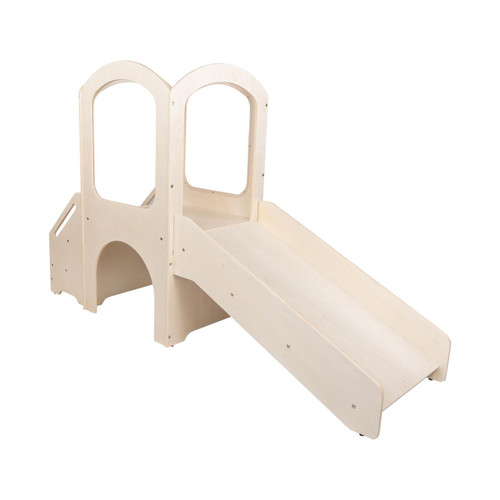
Toddler Loft Set - RTA
CF-AG1617$1,386.00Wooden Toddler Play Loft with Stairs, Tunnel & Ramp - Indoor Gross Motor Play Structure Designed to encourage movement, confidence, and joyful discovery, the Wooden Toddler Play Loft with Stairs, Tunnel & Ramp transforms everyday indoor play...
(:1f476:) What ages are indoor play lofts appropriate for?
Most indoor play lofts are designed for preschool and early elementary children, typically around ages 3–8, depending on height and access type. Programs serving toddlers usually choose low lofts with wide steps and high railings, while classrooms with older children can accommodate taller decks and more complex access points.
(:1f9e0:) What developmental benefits do indoor play lofts offer?
Play lofts encourage gross motor development (climbing, stepping, balance) as children navigate up and down safely. The elevated “clubhouse” feel also supports social skills, cooperative play, and imaginative scenarios, and many teachers use the loft as a cozy reading nook or calm corner to support self‑regulation and focus.
(:1f4cf:) How much space does an indoor play loft need?
Even compact lofts require space for the footprint, safe access, and clear floor area around the steps. Many settings plan for at least a 6x6 to 8x8 foot zone, ensuring children can queue, climb, and play underneath without bumping into furniture or circulation routes. Always check the manufacturer’s recommended clearance around the loft.
(:1fab5:) What materials work best for indoor play lofts in classrooms and childcare centers?
Most indoor lofts for programs are built from sealed wood or wood/composite panels because they are sturdy, visually warm, and can blend with furniture. Some designs incorporate carpeted decks for sound dampening and comfort, as long as surfaces are durable and easy to vacuum and spot-clean on a regular schedule.
(:1f3e5:) Are indoor play lofts suitable for therapy and pediatric healthcare settings?
Yes, when chosen carefully. In therapy gyms and pediatric clinics, lofts can be used for graded gross-motor challenges, confidence building, and pretend play that helps children process experiences. Units for these spaces should emphasize easy-clean surfaces, strong sightlines, and clear posted rules about how many children may be on the loft at one time.
