
Our indoor playhouses are enclosed play structures that give children a dedicated space for imaginative play, role play, and creative exploration indoors. Commonly used in classrooms, playrooms, and children’s activity spaces, playhouses allow children to act out stories, everyday experiences, and social interactions in a contained environment. Built for durability and everyday use, indoor playhouses support imaginative play while creating inviting spaces for independent and collaborative indoor play.
Products List
-

 17%Quick Ship17%Quick Ship
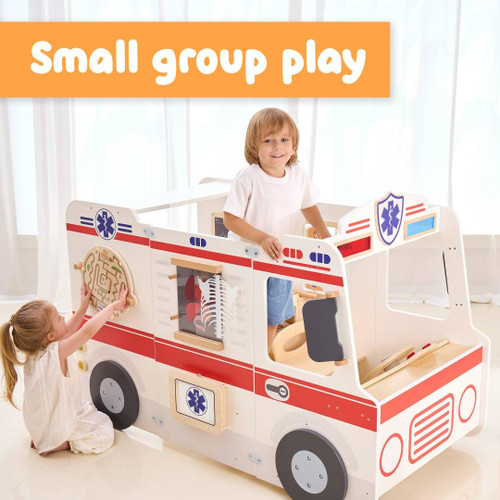
Super Ambulance Playhouse
LA-SW400161Sale: $999.99Price: $1,199.99Super Ambulance Playhouse - Imaginative Role Play for Social Development Bring rescue stories to life with the Super Ambulance Playhouse. This large ambulance playhouse lets kids act as real helpers. Children can explore, care, and work together. The... -
 17%Quick Ship17%Quick Ship
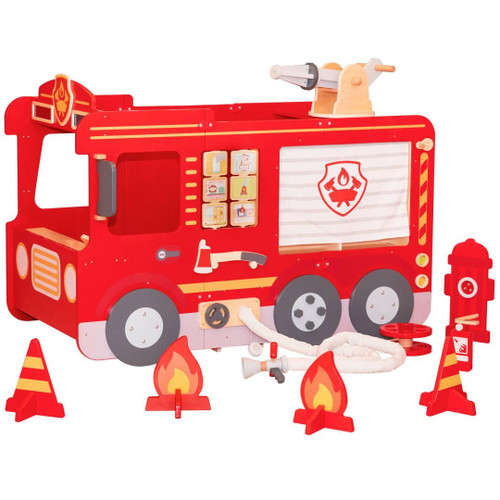
Super Fire Engine Playhouse
LA-SW400157Sale: $999.99Price: $1,199.99Super Fire Engine Playhouse - Imaginative Role Play for Teamwork Fun Bring rescue missions to life with the Super Fire Engine Play House. This exciting fire truck playhouse lets kids act as real firefighters. Children can turn knobs, move parts, and...
(:1f3e0:) What size indoor playhouse works best in shared spaces like classrooms or waiting rooms?
Most pediatric and childcare programs choose playhouses around 3–4 ft wide and deep, with at least 5–6 ft of clear space around the entrance so children can move safely. In classrooms, compact houses fit well in a reading or dramatic-play corner, while larger cottage-style units work best in a dedicated play area.
(:1f9d2:) How many children can safely use an indoor playhouse at once?
Most indoor playhouses are comfortable for 2–4 children at a time, depending on footprint and headroom. In classrooms and childcare settings, it’s helpful to post simple rules (maximum number of children inside, no climbing on the roof or windows) so teachers can manage use and keep play cooperative.
(:1f3ad:) What developmental benefits do indoor playhouses offer in classrooms and therapy rooms?
Indoor playhouses support dramatic play, social skills, and language development as children act out “home,” “school,” or “doctor” scenarios. In therapy settings, they provide a safe, contained space for practicing turn‑taking, emotional expression, and calming, retreat-style play.
(:1f9e9:) Which materials work best for classrooms and pediatric spaces: fabric, plastic, or wood?
Fabric tents are lightweight and cozy but better for gentler use or nap/read corners. Plastic houses are durable and easy to sanitize. Wooden playhouses feel like permanent furniture, blend well with classroom or clinic décor, and tend to hold up longest in childcare and pediatric environments.
(:1f504:) How can indoor playhouses be adapted for different themes or therapy goals?
Educators and therapists often keep one sturdy house as a “blank canvas” and rotate props—kitchen items for “home,” clipboards and dolls for “doctor,” menus and trays for “restaurant,” or pillows and books for a “reading nook.” This makes the same structure useful for many themes, seasons, and treatment goals.
