Products List
-
 - 10%Made in USA- 10%Made in USA
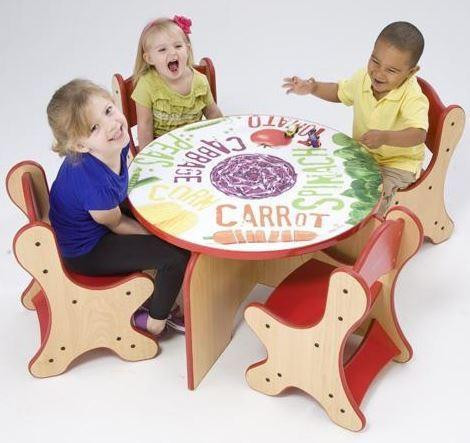
Veggie Children's Play Table
PS-25-TBR-011$619.62$686.97Veggie Kid-Sized Play Table - Yellow & Blue Preschool Activity Table Create a bright, welcoming space where children feel instantly at ease with the Veggie Kid-Sized Play Table in cheerful Yellow and... -

 - 10%Made in USA- 10%Made in USA
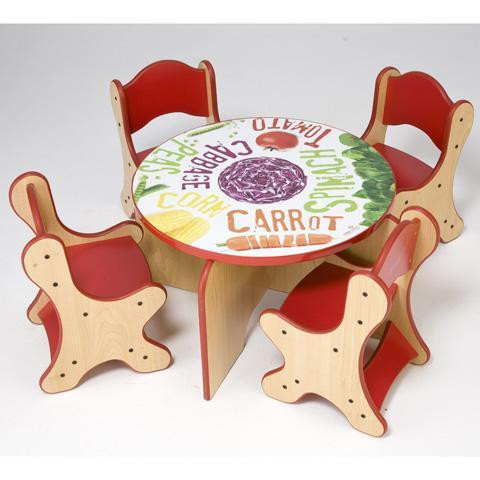
Veggie Kids Table & Chairs Set
PS-25-RST-011$1,323.42$1,467.27Playscapes Veggie Kids Table & Chairs Set - Healthy Habits Start at the Table Who knew vegetables could be this fun? The Playscapes Veggie Kids 5 Piece Table & Chairs Set turns everyday waiting time... -
 - 9%Made in USAQuick Ship- 9%Made in USAQuick Ship
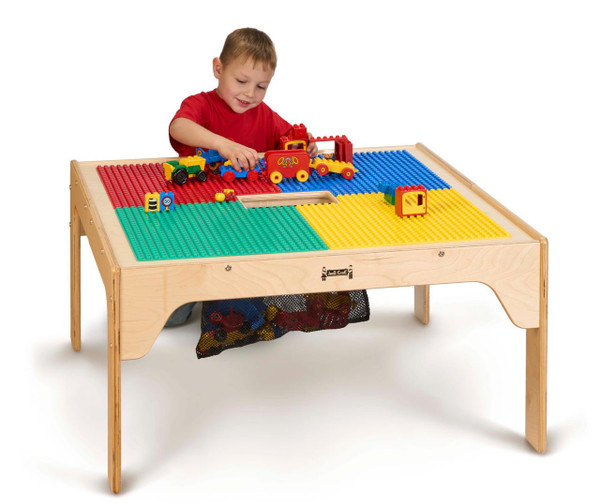
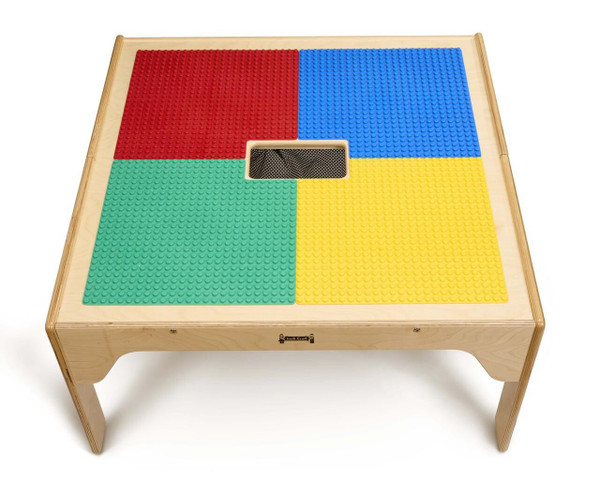
Wooden Kids DUPLO® Square Storage Table
SM-5360JC$637.82$701.60Large Wooden DUPLO® Compatible Square Table with Dual Storage - Preschool Building Table for Collaborative Play The Large Wood DUPLO® Compatible Square Table with Dual Storage gives children plenty...
Our activity tables are versatile play surfaces designed to support hands-on games, creative activities, and learning experiences in shared environments. Commonly used in classrooms, libraries, playrooms, and children’s activity areas, these tables encourage exploration, collaboration, and focused engagement. Built for durability and everyday use, activity tables provide a stable, inviting space where children can play, create, and learn together.
Frequently Asked Questions About Children's Activity Tables
(:1f476:) What ages are children’s activity tables best suited for?
Most commercial activity tables are designed for preschool and early elementary ages, roughly 2–8 years. Simpler tops (vehicles, basic mazes) work well for toddlers, while more complex gear systems or game surfaces appeal to older kids.
(:1f9e0:) What developmental benefits do activity tables offer?
They promote fine‑motor skills, hand‑eye coordination, visual tracking, problem‑solving, and early STEM concepts like cause‑and‑effect and simple mechanics. Shared tables also encourage social skills, including cooperation and turn‑taking, since several children play side by side.
(:1f4cf:) What size and how many activity tables does a waiting room need?
Smaller waiting rooms typically use one compact table (about 24–36 inches across) placed in a defined kids’ corner, while larger spaces may include 2–3 tables for different age groups or themes. Position tables where adults can supervise easily, but away from doors and traffic paths so children can sit and play safely.