Wall Marble Mazes by Age, Size & Difficulty: Commercial vs Home Grade
Table of Contents
- A marble maze that delights kids at home can shatter in weeks at a pediatric clinic. The difference between commercial and home-grade isn't just durability: it's enclosed marbles, infection-control surfaces, and warranties that actually matter when hundreds of hands touch the same panel daily.
- Key Takeaways
- Public Spaces Demand More Than a Home Toy Can Deliver
- Age and Difficulty: Matching the Maze to Your Visitors
- Why Commercial-Grade Build Quality Matters
- Safety and Infection Control Standards That Matter
- Best Commercial Picks by Setting
- Warranties and Long-Term Value Worth Budgeting For
- Choose Commercial-Grade Once - Built to Outlast the Alternatives
- FAQs
A marble maze that delights kids at home can shatter in weeks at a pediatric clinic. The difference between commercial and home-grade isn't just durability: it's enclosed marbles, infection-control surfaces, and warranties that actually matter when hundreds of hands touch the same panel daily.
Key Takeaways
- Commercial-grade wall marble mazes are built to a completely different standard than home toys - higher durability, stricter safety specs, and surfaces designed for repeat disinfection.
- Matching maze complexity to the age group you serve matters as much as build quality; the wrong difficulty level leads to disengaged kids and damaged equipment.
- Wall-mounted designs eliminate loose-part risks entirely, which is a non-negotiable in medical, therapy, and high-traffic public settings.
- Brands like HABA, Playscapes, and LiteZilla each serve a different institutional need - knowing which fits your setting saves budget and headaches.
- The best commercial picks by setting are covered below, including what to look for in warranties and long-term value.
Choosing a wall marble maze for a pediatric clinic, school library, or community center is a fundamentally different decision than picking one up for a home playroom. The stakes are higher, the traffic is heavier, and the margin for error - a broken panel, a choking incident, a surface that cannot be sanitized - is essentially zero. This guide breaks down exactly what separates commercial-grade wall marble mazes from their home-use counterparts, and how to match the right product to the right space.
Public Spaces Demand More Than a Home Toy Can Deliver
A marble maze that works beautifully in a living room can fall apart fast in a pediatric waiting room. Home-grade sets are designed for occasional use by one family. Commercial environments cycle through dozens - sometimes hundreds - of children each day, each one pulling, pushing, and testing the limits of whatever is on that wall.
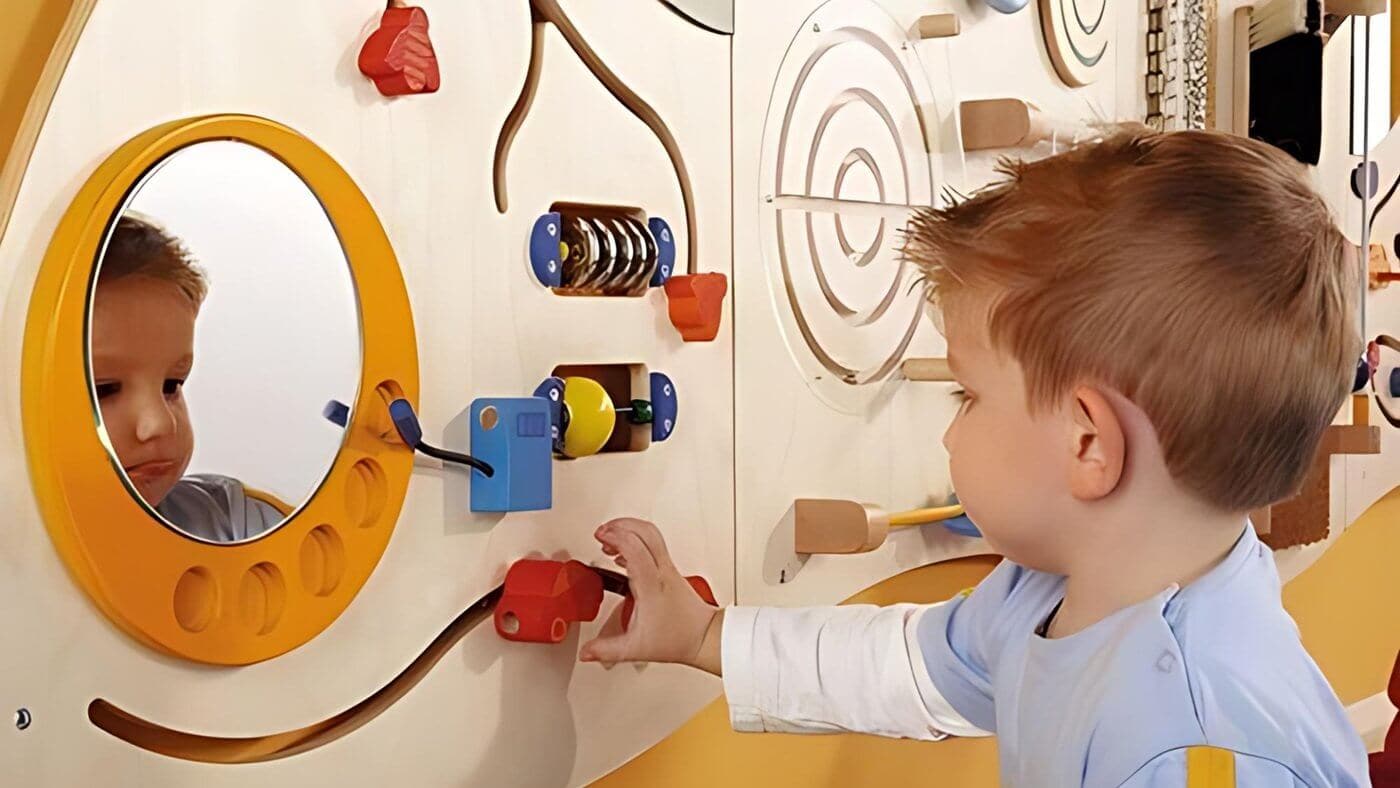
The differences go well beyond appearance. Commercial-grade wall panels use heavier hardware, reinforced joints, and durable finishes engineered to withstand constant load. Surfaces are smooth and non-porous so staff can wipe them down with disinfectants between patients. Marbles are fully enclosed - no small parts, no choking risk, no pieces missing by noon. Little People's Cove's commercial wall marble run collection offers a useful starting point for understanding what this category looks like across different age groups and settings.
The American Academy of Pediatrics specifically recommends against toys with small, detachable parts in waiting rooms - not just for safety, but for infection control. A wall-mounted marble maze that contains everything within its frame addresses both concerns at once.
Age and Difficulty: Matching the Maze to Your Visitors
Getting the difficulty level right matters as much as build quality. A maze that is too complex frustrates toddlers. One that is too simple bores an eight-year-old in thirty seconds. Either way, the equipment takes the abuse.
Toddlers and Preschool (Ages 2-5): Guide-and-Go Simplicity
For the youngest visitors, the goal is low-barrier engagement - something a two-year-old can interact with independently without adult intervention. Drop-and-watch marble tracks are ideal here. These panels use large, enclosed marbles with no loose components and no frustration from builds that fall apart. For this youngest age group, simplicity is the feature, not a limitation. Look for panels built from beechwood with non-toxic paint designed to hold up under daily classroom and clinic use.
Early Elementary (Ages 5-8): Building and Problem-Solving
Kids in this range are ready for a challenge, but they still need structure. Products like the Design and Drill Marble Maze by Educational Insights hit the right note - children use a toy drill to bolt together 15 track pieces across 10 different maze configurations. It builds fine motor skills, spatial reasoning, and early engineering thinking without overwhelming younger users.
This difficulty tier works especially well in supervised settings like classrooms or after-school programs, where a staff member can reset the activity between groups. It is a strong bridge between guided play and fully open-ended building.
Mixed-Age and Group Spaces (Ages 6-12): Modular Flexibility
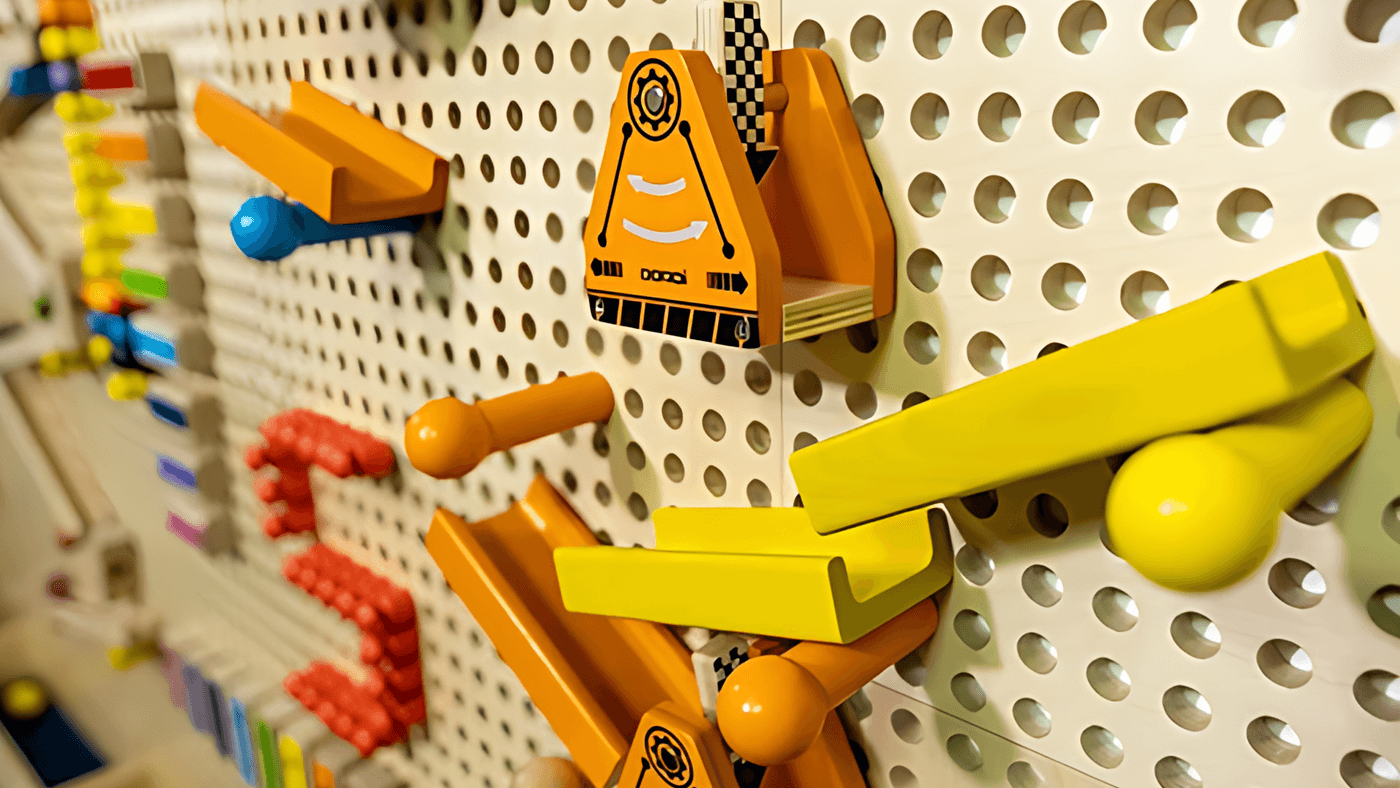
Libraries, museums, and community centers rarely serve just one age group. A modular grid system addresses this cleanly. The KidWorx modular wall grid uses a universal pegboard-style frame where more than 15 interchangeable game panels - marble mazes, xylophone runs, and others - snap into the same structure. Staff can rotate panels in and out as the crowd changes, without replacing the entire installation. That kind of flexibility is a genuine long-term investment for spaces that need to adapt without constant re-spending.
Wall Marble & Ball Mazes Recommendation By Age
| Age Range | Best Pick | Difficulty | Wall-Mounted? |
|---|---|---|---|
| 2–5 | KidWorx Magnet Maze | Easy | Yes |
| 3–8 | Basic commercial panel | Easy–Medium | Yes |
| 5–9 | Design & Drill Marble Maze | Medium | No (tabletop) |
| 6–12 | Marble Genius Extreme Set | Medium–Hard | No (tabletop/floor) |
| All ages, rotating | KidWorx modular grid | Adjustable | Yes |
KidWorx™ Turbo Trax Raceway Wall Ball Run
$2,000.00
KidWorx Turbo Trax Raceway Wall Ball Run - STEM Learning for Fast Engineering Play Bring fast action to the wall with the KidWorx Turbo Trax… read more
Shop Now!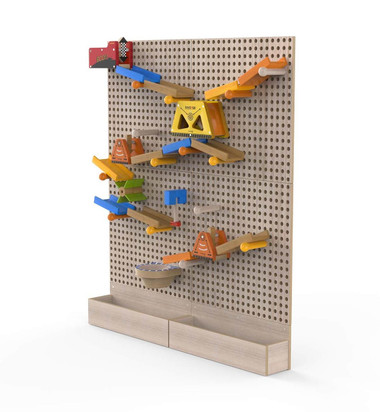
Why Commercial-Grade Build Quality Matters
Built for High-Traffic: Robust Construction and Lasting Finishes
In institutional environments, durability drives the purchase decision - not price, not aesthetics. Commercial-grade wall panels are engineered with solid construction, smooth edges, and dependable hardware built to absorb constant, repeated use without loosening, chipping, or warping.
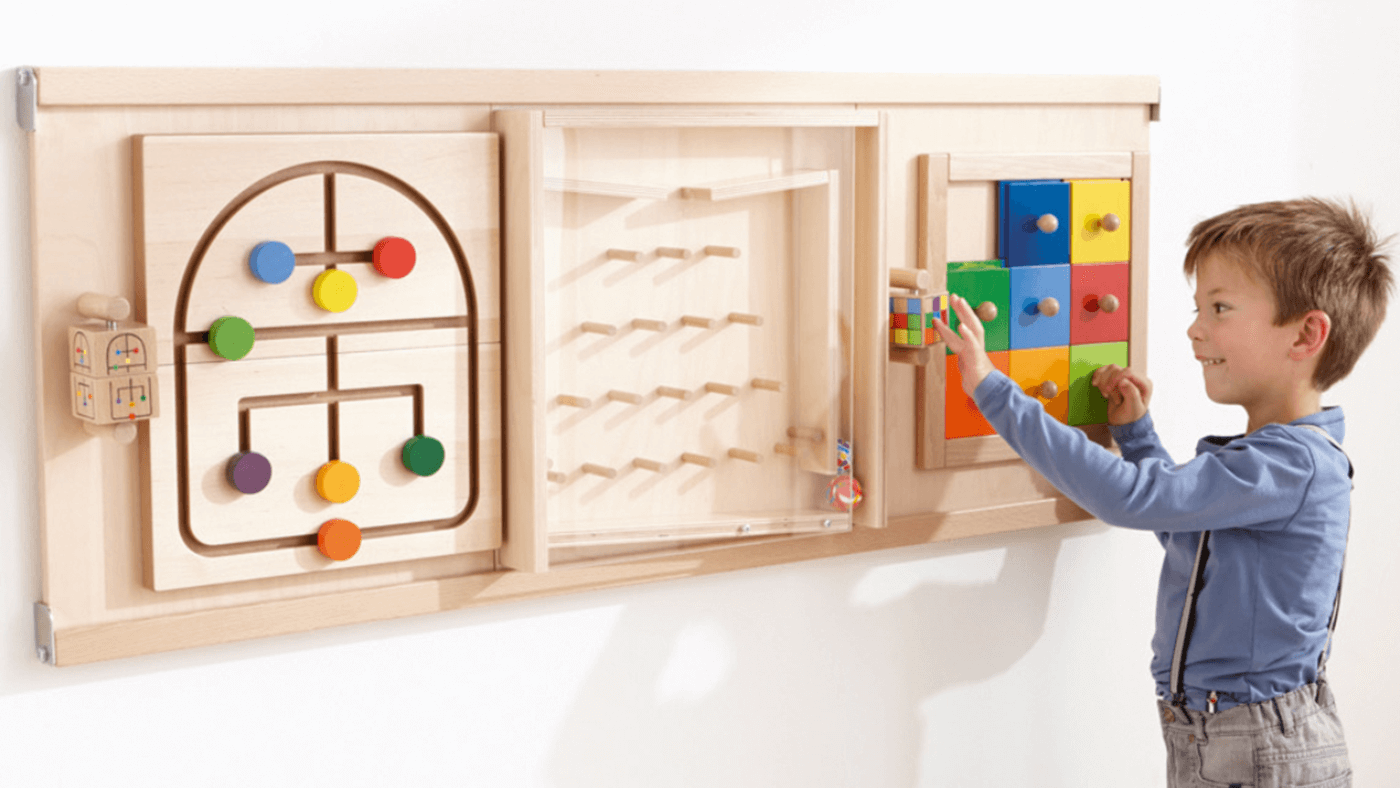
HABA's Pro wall activity panels are a benchmark example: constructed to a 10-year commercial standard, manufactured in Germany from solid birch or beechwood with eco-friendly, child-safe stains. That is backed by a formal manufacturer's warranty covering a decade of institutional use. For facilities making a capital purchase, that kind of guarantee changes the math significantly.
Wall-Mounted Design Eliminates Loose-Part Risks
Wall-mounting does more than save floor space - though that is a genuine advantage in tight waiting rooms and clinic corridors. It also removes the category of accidents caused by toys being knocked off tables, pieces scattering across floors, or components being pocketed by curious hands. When the entire system is secured to the wall and all moving parts are contained within the panel, the risk profile drops dramatically. For facility managers responsible for duty of care across dozens of daily visitors, that structural safety is worth prioritizing over any feature comparison.
Safety and Infection Control Standards That Matter
No Loose Parts: Fully Contained Marbles That Eliminate Choking Hazards
Regulatory guidance on children's waiting room toys is consistent: avoid small, detachable parts. Commercial-grade wall marble mazes address this by design - marbles travel through sealed channels within the panel and cannot be removed. There is nothing to pocket, swallow, or lose between sessions.
This matters most in medical settings where very young children are present, often already stressed, and where staff cannot monitor every interaction with a play panel throughout a busy day.
Smooth, Non-Porous Surfaces for Hospital-Grade Disinfection
Infection control standards for children's play areas require surfaces that are smooth, non-porous, and compatible with hospital-grade disinfectants - meaning they can be wiped down repeatedly without degrading. Rough textures, painted wood with visible grain, or porous foam inserts fail this standard quickly under real-world cleaning schedules.
Playscapes (distributed through Gressco) is purpose-built around this requirement. Their wall panels feature smooth, non-porous surfaces explicitly designed to meet healthcare-environment infection control standards, with no loose parts that require individual sanitizing between uses. It is one of the few product lines designed from the ground up for patient-volume settings rather than adapted from consumer toys.
Best Commercial Picks by Setting
Medical and Therapy Waiting Rooms: HABA and Playscapes
Medical offices benefit most from calming, quiet, easy-to-clean options rather than large, stimulating installations. Both HABA and Playscapes fit this need well, though differently. HABA brings premium German craftsmanship with a 10-year warranty and a heirloom aesthetic suited to higher-end pediatric and therapy clinics. Playscapes covers more ground - over 160 different wall activity items - with flexible price points and healthcare-specific surface standards. One note on HABA: products are custom made to order and generally not returnable, with lead times that vary by product and can range from 2 to 16 weeks. Build that window into any facility planning timeline.
Sensory Rooms and Larger Community Spaces: LiteZilla
LiteZilla is a different category entirely. Best known for giant light-up sensory walls, they also carry the MagWiz magnet marble maze wall panels and Marble Motion sensory panels. Their frames use durable HDPE construction, and the light boards are backed by a 10-year workmanship warranty, with electrical components covered separately for 2 years. Some models include dishwasher-safe sanitation baskets for their LitePins, which simplifies cleaning logistics for larger installations.
These are statement pieces - anchor features for dedicated sensory rooms or large community spaces - and they require professional installation with proper wall support. Not the right call for a small waiting room, but a compelling investment for spaces where the play environment itself is part of the mission.
Classrooms, Libraries, and Museums: KidWorx Modular Grid
For spaces serving mixed ages and rotating demographics, the KidWorx Magnet Maze Builder system - with its furniture-grade beechwood grid and durable snap-in connectors - offers stability and adaptability in one package. The ability to swap panels as the audience changes means the installation grows with the space rather than aging out of relevance. Note that the KidWorx Magnet Maze Marble Run Builder is rated for ages 6 and up, making it best suited to early elementary through middle childhood rather than toddler-age visitors.
MagWiz Kinetics Magnetic Wall Ball Run - 5x5
$7,950.00
MagWiz Kinetics Magnetic Wall Ball Run 5x5 - Interactive STEM Wall Panel for Motion Learning Turn any wall into a learning zone with the MagWiz™ Kinetics Magnetic 5×5 Wall… read more
Shop Now!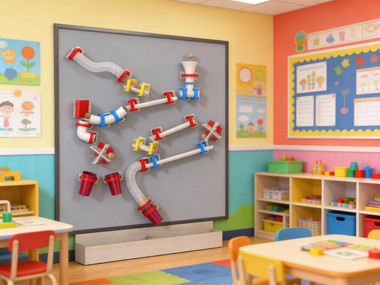
Warranties and Long-Term Value Worth Budgeting For
Commercial-grade equipment costs more upfront than home-use alternatives. The value equation shifts when warranties are factored in. A panel backed by a 10-year commercial warranty - like those from HABA and LiteZilla - amortizes its cost over a decade of use. A cheap home-grade toy replaced every 18 months in a high-traffic setting costs more over the same period, with added staff time spent managing replacements, returns, and safety incidents. Total cost of ownership is the right frame for budgeting public play installations - not sticker price.
Choose Commercial-Grade Once - Built to Outlast the Alternatives
The core principle is straightforward: commercial spaces deserve commercial equipment. Wall marble mazes built for institutional use cut the recurring costs of replacement, reduce liability from safety incidents, and make infection control genuinely manageable. Matching the right maze to the right age group - and the right brand to the right setting - turns a simple waiting room feature into a durable, meaningful part of the visitor experience.
See the full range of wall marble runs and commercial-grade play panels at Little People's Cove, a trusted resource for facilities equipping children's public spaces with purposeful, lasting play solutions.
Quick Brand Comparison
| Brand | Strength | Best Setting | Investment Level |
|---|---|---|---|
| HABA PRO | Premium build, long warranty | Pediatric offices, upscale clinics | Mid-high, custom lead time |
| LiteZilla | Statement/anchor piece, sensory focus | Sensory rooms, larger community spaces | High, needs installation |
| Playscapes | Purpose-built for healthcare/waiting rooms | Medical waiting rooms, therapy clinics | Wide range, budget-friendly options available |
FAQs
What age are wall marble mazes suitable for?
Most wall marble mazes are designed for children ages 3 and up, but the correct age depends on the size of the balls, complexity of the track, and manufacturer’s recommendation. Choose simple, large-piece designs for preschoolers and more challenging, multi-route mazes for older children.
Are wall marble mazes safe for toddlers?
Wall marble mazes with loose marbles or small balls are generally not appropriate for children under 3 because marbles and small toy parts can create a choking hazard. Always follow the product’s age label, supervise young children, and choose a securely enclosed wall panel or oversized-ball design when possible.
What is the difference between a wall marble maze and a wall marble run?
A wall marble maze usually emphasizes finding a route through obstacles, while a wall marble run focuses on building a track that carries a ball from the top to the bottom. Many products combine both features, allowing children to arrange ramps, tubes, turns, and pathways on a vertical surface.
How do you mount a wall marble maze?
Mounting depends on the product. Some systems use adhesive pads, suction cups, magnets, or clips, while permanent activity panels may require screws and wall anchors. For a DIY version, use painter’s tape or a separate trifold board, test each section as you build, and make sure the finished maze is securely supported.
What skills do children develop with wall marble mazes?
Wall marble mazes encourage fine-motor control, hand-eye coordination, visual-spatial awareness, planning, problem-solving, and persistence. They also introduce STEM concepts such as gravity, motion, friction, momentum, and cause and effect through hands-on experimentation.