7 Best Bead Maze Toys for Pediatric Clinics and Waiting Rooms
Table of Contents
- Pediatric clinics face a crucial decision when choosing bead maze toys: wall-mounted panels that save floor space or freestanding tables that encourage social play. But there's one factor that matters even more than space—and most facilities overlook it when selecting waiting room toys.
- Key Takeaways
- Why Bead Maze Toys Are Highly Beneficial for Pediatric Waiting Rooms
- Recommended Wall-Mounted Bead Maze Toys
- Two Recommended Freestanding Bead Maze Tables
- Wall-Mounted vs Freestanding: Which Fits Your Clinic?
- Infection Control Standards for Waiting Room Toys
- Choose Professional-Grade Bead Mazes That Keep Children Calm and Safe
- FAQs
Pediatric clinics face a crucial decision when choosing bead maze toys: wall-mounted panels that save floor space or freestanding tables that encourage social play. But there's one factor that matters even more than space—and most facilities overlook it when selecting waiting room toys.
Key Takeaways
- Wall-mounted bead maze toys are ideal for clinics with limited floor space, requiring zero square footage while providing infection control benefits through easier sanitization.
- Freestanding bead tables foster social interaction among multiple children simultaneously, making them perfect for larger waiting areas with dedicated play zones.
- Professional-grade bead mazes meet strict healthcare standards with durable materials like high-pressure laminate and solid wood that withstand frequent disinfection.
- Infection control compliance requires selecting toys with hard, non-porous surfaces that align with AAP guidelines for healthcare environments.
- Strategic toy selection can significantly reduce pediatric anxiety while supporting fine motor skill development during medical visits.
Choosing the right bead maze toys for pediatric clinics involves balancing space constraints, infection control requirements, and child engagement needs. The following guide examines the top wall-mounted and freestanding options specifically designed for healthcare environments.
Why Bead Maze Toys Are Highly Beneficial for Pediatric Waiting Rooms
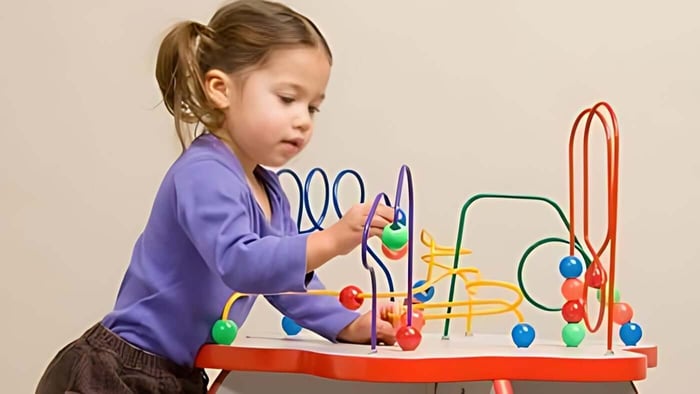
Bead maze toys serve as powerful anxiety-reduction tools in pediatric healthcare settings, redirecting children's attention away from medical concerns while providing therapeutic benefits. These classic wire-and-bead rollercoasters offer distraction through engaging play, helping children develop fine motor skills and hand-eye coordination during potentially stressful medical visits.
The therapeutic value extends beyond simple entertainment. Moving colorful beads along curved wire tracks builds essential developmental skills including color recognition, spatial awareness, and bilateral coordination. The gentle clanking sounds and vibrant colors provide sensory engagement that soothes nervous children while keeping small hands productively occupied.
Healthcare facilities favor bead mazes because they eliminate common waiting room challenges. The permanently attached beads prevent choking hazards and lost pieces, while the mess-free design maintains cleaner environments. Little People's Cove specializes in commercial-grade bead maze solutions designed specifically for medical and therapeutic environments.
Recommended Wall-Mounted Bead Maze Toys
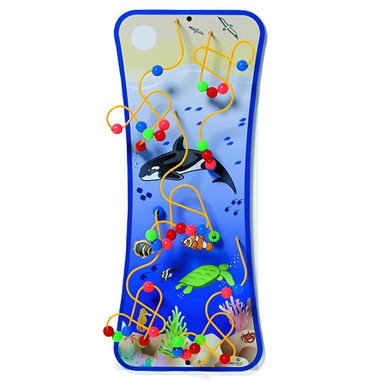
1. Seascape Wire Bead Maze Wall Toy - Ideal for Small Spaces
The Seascape Wire Bead Maze transforms narrow hallways and compact waiting areas into engaging play spaces without sacrificing valuable floor real estate. This wall-mounted panel features ocean-themed wire tracks with colorful sea creatures that glide along curved pathways, appealing to children aged 2-6 years.
Installation requires mounting directly into wall studs using heavy-duty hardware, creating a permanent fixture that cannot be tipped or moved by active children. The marine theme provides educational opportunities as children identify different sea animals while developing bilateral coordination skills through bead manipulation.
Seascape Flip Wire & Bead Maze Wall Toy
$369.84
Seascape Flip Wire & Bead Maze Wall Panel - Ocean Maze for Motor Skills Bring ocean adventure to the wall with the Seascape Flip Wire...… read more
Shop Now!2. Mirror and Bead Wall Toy - Visual and Motor Skill Benefits
This wall panel combines traditional bead maze elements with reflective surfaces, doubling the visual stimulation and engagement potential. The integrated mirrors encourage self-recognition and spatial awareness while the wire tracks challenge fine motor development through precise hand movements.
The dual-function design maximizes therapeutic value in minimal space, making it particularly valuable for exam rooms or narrow corridors where every square inch counts. The mirror component adds depth perception training while maintaining the infection control benefits of hard, easily sanitized surfaces.
Mirror and Bead Wall Toy

$244.26
Mirror & Bead Wall Panel - Sensory Exploration Activity Toy Create a fun discovery space with the Mirror & Bead Wall Toy - Natural Frame....… read more
Shop Now!3. Loco Motion Wires Beads and Gears - Multi-Activity Panel
The Loco Motion panel represents the most feature-rich wall-mounted option, featuring multiple activity zones including wire tracks, spinning gears, and interactive elements. This modular system accommodates different developmental stages and attention spans within a single installation.
Children can progress from simple bead manipulation to complex gear interactions, extending engagement time and reducing waiting room restlessness. The varied activities support different learning styles, from visual learners attracted to spinning elements to kinesthetic learners who prefer bead manipulation challenges.
Loco-Motion Wires, Beads, and Gears Wall Toy

$487.14
Loco-Motion Wires, Beads & Gears Wall Toy - Motor Skills Sensory Activity Toy Turn any wall into a place of motion and discovery with the...… read more
Shop Now!Two Recommended Freestanding Bead Maze Tables
1. Wavy Legs Beads Mirror Play Table - Fosters Social Interaction
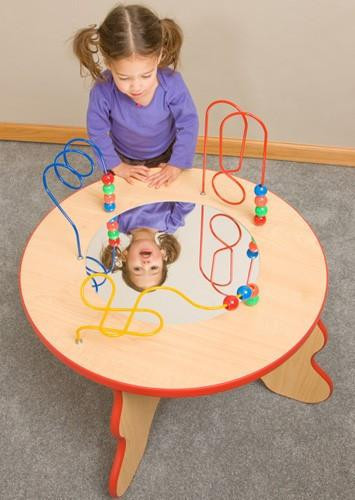
The Wavy Legs table creates a central hub for collaborative play, featuring curved wire tracks that wind around a child-height surface with integrated mirror elements. Multiple children can simultaneously engage with different sections, promoting social interaction and reducing competition for play opportunities.
The 360-degree accessibility allows children to move freely around the table, encouraging natural play patterns and peer interaction. The mirror integration supports self-awareness development while the varied bead colors and shapes provide sorting and categorization learning opportunities that align with early childhood development goals.
Wavy Legs Beads & Mirror Play Table
$368.46
Playscapes Wavy Legs Beads & Mirror Table - Sensory Activity Table for Motor Skills Create a welcoming place for discovery with the Playscapes Wavy Legs...… read more
Shop Now!2. Bead Blast Vehicle Venture Sand Activity Table - High Engagement with Dual Activities
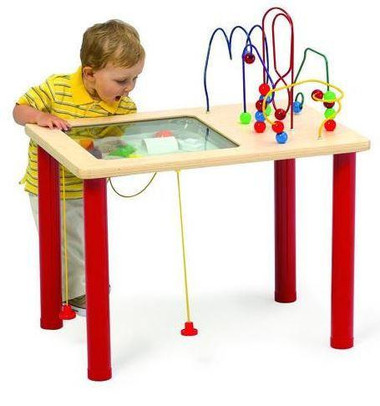
This table combines traditional bead maze elements with contained sand play areas, offering dual therapeutic activities within a single piece of furniture. The vehicle-themed design appeals to transportation-loving children while providing varied sensory experiences through both tactile sand manipulation and visual bead tracking.
The contained sand areas eliminate mess concerns while providing calming sensory input for children with processing needs. The combination of activities extends engagement duration, making it particularly valuable for longer wait times or facilities serving children with diverse developmental needs and attention spans.
Bead Blast & Vehicle Venture Sand & Activity Table
$862.50
Bead Blast & Vehicle Venture Sand & Activity Table - Enclosed Magnetic Play and Bead Maze Activity for High-Traffic Spaces Enhance your waiting room, pediatric...… read more
Shop Now!Wall-Mounted vs Freestanding: Which Fits Your Clinic?
Space Requirements and Installation Considerations
Wall-mounted units require zero floor space while demanding permanent installation into structural supports. They excel in narrow corridors, small exam rooms, or facilities with limited square footage where every inch of floor space must remain accessible for wheelchairs and medical equipment movement.
Freestanding tables typically require 3-6 square feet of dedicated floor space but offer immediate deployment without wall modifications. They work best in larger waiting areas with designated children's zones where the table can serve as a natural boundary between adult and child spaces.
Child Capacity and Social Interaction Benefits
Wall panels generally accommodate fewer children simultaneously due to their linear design, while freestanding tables support multiple children playing cooperatively. The choice depends on typical patient volume and desired interaction patterns within the waiting environment.
Tables naturally encourage face-to-face interaction and cooperative play, which can reduce anxiety through peer support. Wall units provide individual focus opportunities, beneficial for children who become overwhelmed in group settings or need concentrated therapeutic activities.
Durability and Long-Term Investment Considerations
Both formats utilize commercial-grade construction with high-pressure laminate surfaces and solid wood frameworks designed for intensive healthcare use. Wall-mounted systems offer superior stability through permanent anchoring, while tables provide flexibility for facility redesigns or relocation needs.
Both options represent significant investments in patient comfort and facility functionality, with selection depending primarily on space availability and intended use patterns rather than cost considerations.
Infection Control Standards for Waiting Room Toys
Material Requirements for Easy Sanitization
Healthcare-grade bead maze toys utilize non-porous materials including high-pressure laminate, sealed wood finishes, and medical-grade plastics that withstand frequent disinfection protocols. These hard surfaces resist bacteria accumulation and maintain structural integrity through repeated sanitization cycles using hospital-approved cleaning solutions.
Surface textures remain smooth to prevent dirt accumulation in crevices or seams that could harbor pathogens. Wire components feature durable finishes that maintain colorful appearances throughout extended facility lifespans while resisting damage from regular cleaning procedures.
AAP Guidelines for Healthcare Toy Selection
The American Academy of Pediatrics recommends selecting toys that can be thoroughly cleaned between patient uses, specifically advising against shared stuffed animals or porous materials that cannot be properly disinfected. Bead maze toys align well with these guidelines through their hard, washable surfaces and permanently attached components.
AAP standards emphasize choosing toys without small removable parts that could create choking hazards or become lost within healthcare environments. The fixed-bead design of many bead maze toys significantly reduces concerns about choking hazards and lost parts while providing engaging play experiences that meet developmental and therapeutic objectives for pediatric patients.
Choose Professional-Grade Bead Mazes That Keep Children Calm and Safe
Selecting appropriate bead maze toys for healthcare environments requires balancing therapeutic benefits with practical facility needs including space constraints, infection control requirements, and patient demographics. Wall-mounted options excel in space-limited settings while providing individual focus opportunities, whereas freestanding tables create social interaction hubs that support peer engagement and cooperative play.
Professional-grade construction ensures long-term durability and compliance with healthcare standards, making these investments valuable additions to pediatric care environments. The combination of anxiety reduction, skill development, and infection control benefits positions quality bead maze toys as important components of patient-centered healthcare facility design.
The therapeutic value of well-chosen waiting room activities extends beyond simple entertainment, contributing to positive healthcare experiences that can influence children's long-term attitudes toward medical care. Strategic selection of engaging, safe, and easily maintainable play equipment supports both immediate patient comfort and broader healthcare delivery objectives.
For selection guidance and professional-grade bead maze solutions designed specifically for healthcare environments, visit Little People's Cove where clinical play specialists help facilities create engaging, therapeutic waiting room experiences.
FAQs
Why are bead maze toys good for pediatric clinics?
Bead maze toys help create a more child-friendly waiting space. They keep children engaged and help make visits feel a little easier for families.
What age group enjoys bead maze toys most?
Bead maze toys are especially popular with toddlers and preschoolers. They are a great fit for young children who enjoy hands-on play.
Are bead maze toys easy to clean?
Many bead maze toys are made for shared spaces and are easy to wipe down. That makes them a practical option for busy clinics.
Should we choose a tabletop or wall-mounted bead maze toy?
It depends on your space and layout. Wall-mounted options can save floor space, while tabletop styles may work well in smaller play areas.
How do bead maze toys improve the waiting room experience?
They help make the waiting room feel more welcoming and less stressful. When children have something engaging to do, the wait can feel shorter and more comfortable.